
Animals
Form & Function Investigation Sequence with activities
A man's character greatly takes its hue and shape from the form and color of things about him.
Frederick Douglas
Overview
- Overview
- Big ideas, concepts, facts, & outcomes
- Science content concepts & outcomes
- Inquiry & science process concepts
- Pedagogical overview
- Activities sequence
- Focus questions
- Materials
- Scoring guide suggestions
- Unit activity sequence
- Activity 1 - Animal Camouflage
- Activity 2 - Animal Survival
- Activity 3 - Eat and Run
- Activity 4 - Focus on Bird Beaks
- Activity 5 - Whale Echolocation
- Activity 6 - How do Penguins Stay Warm in Extremely Cold Water?
- Lab notes
- Lab note 1 - Animal Camouflage
- Lab note 2 - Animal Survival
- Lab note 3 - Eat and Run
- Lab note 4 - Focus on Bird Beaks
- Lab note 5 - Whale Echolocation
- Lab note 6 - How do Penguins Stay Warm in Extremely Cold Water?
- Support materials - moth patterns (small, medium, & large
A sequence of plans to facilitate a review and develop a deeper understanding of animals form and function and their affect on survival, adaptation, and evolution.
Background resources:
This plan is designed for students who have very little prior knowledge of
Related study topics:
Planning information
Learner background information
- A plan designed for learners who have prior knowledge in cause and effect, use of observations to make inferences, and explanations for observable and non observable events.
- A general understanding that all animals are different and all have individual differences that provide better opportunities for surviving. That animals live in many different climates and land regions, which require them to have certain bodily features and adaptations to live in that region.
- Able to working in groups.
Intended learnings & learners thinkings
See for more information on what to include in general planning
Content concepts or outcomes
(Source concepts & misconceptions)
Big ideas
- Animals have evolved and adapted to the environment in which they live in ways that their form and the way they function allows them to move, obtain food, reproduce, and respond to danger to survive.
Concepts and facts
- Different animals have different features that help them live in different places.
- An organism’s behavior evolves through adaptation to its environment.
- How a species moves, obtains food, reproduces, and responds to danger are based in the species’ evolutionary history.
Outcome
- Describe different animal forms, their functions, and how they related to being adapted to the environment in which they live.
- Describe how animals might have evolved.
Science concepts: physical, earth, life
Big ideas: Animals have basic needs that need to be met for them to survive an reproduce to maintain their species.
Related concepts
- Basic needs ...
- Camouflage
- Survival
Outcome
- Describe how
Anticipated learner thinkings & misconceptions
Believe animals today are the same as they were thousands and millions of years ago.
Inquiry, process, & cross cutting concepts & skills
Inquiry
- Learning can come from careful observation and simple experiments.
- When I experiment I collect observations that describe how different properties change (become variables) when objects and systems interact. This helps me make claims, explain what is happening, and to predict what might happen in the future.
- Scientists use different kinds of investigations depending on the questions they are trying to answer.
- Inquiry concepts
- Process concepts
- Perspective concepts
Form & function - cross cutting concepts
Big ideas: See also Concepts & misconceptions
- The form of an object or system is related to the environment in which it operates.
- The function of an object or system is related to the environment in which it operates.
Related concepts and facts
- Observational data and reasoning is used to explain interactions. Evidence is something that is observed and can be used to understand what is happening and make predictions about future changes.
- Explanations are based on observation derived from experience or experimentation and are understandable.
- Role play can be used to model animal behaviors.
Outcome -
- Provide several example of different animal form and their relationship to function.
Specific outcomes -
- Describe different animal forms, their functions, and how they related to being adapted to the environment in which they live.
- Describe how animals might have evolved.
- Cam
Other possible concepts
Nature of science
- Science is a way of answering questions and explaining the natural world.
History of science and development of technology - perspective of science
See also Concepts & misconceptions also science, math, technology timeline
- People have practiced science and technology for a long time.
- Science develops over time.
- Science investigators such as
Scoring guides suggestions (rubric)
From and function (scoring guide)
Top level
- Explain form is related to function and function is related to the design of the form. Both with animals are related to their environment and evolution, which limits its form and function.
- Describe examples of form and function and how they are related.
- Describe examples of form and function.
Lower level
Using models and role play as explanation (scoring guide)
Top level
- A
Lower level
Strategies to achieve educational learnings
Based on learning cycle theory & method
Instructional Procedure
Pedagogical Overview
Activities Sequence to provide sufficient opportunities for students to achieve the targeted outcomes.
Make sure learners have the prior knowledge identified in the background information.
- Activity 1 - Animal Camouflage
- Activity 2 - Animal Survival
- Activity 3 - Eat and Run
- Activity 4 - Focus on Bird Beaks
- Activity 5 - Whale Echolocation
- Activity 6 - How do Penguins Stay Warm in Extremely Cold Water?
Focus question
Unit focus question:
- How do we identify animals?
- How do we know what they can do?
- How do we tell them apart?
Sub focus questions:
- How does form and function affect animals?
- Do animals have certain features and characteristics that help them to survive in their environment?
Materials
- Lab note 1 - Animal Camouflage
- Lab note 2 - Animal Survival
- Lab note 3 - Eat and Run
- Lab note 4 - Focus on Bird Beaks
- Lab note 5 - Whale Echolocation
- Lab note 6 - How do Penguins Stay Warm in Extremely Cold Water?
Resources
Lesson Plans
Activity 1 - Animal Camouflage
Materials
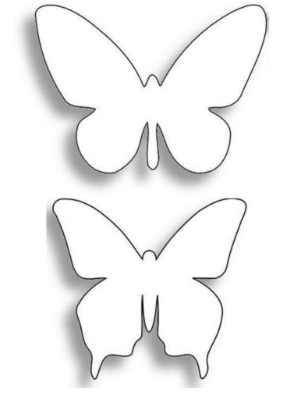
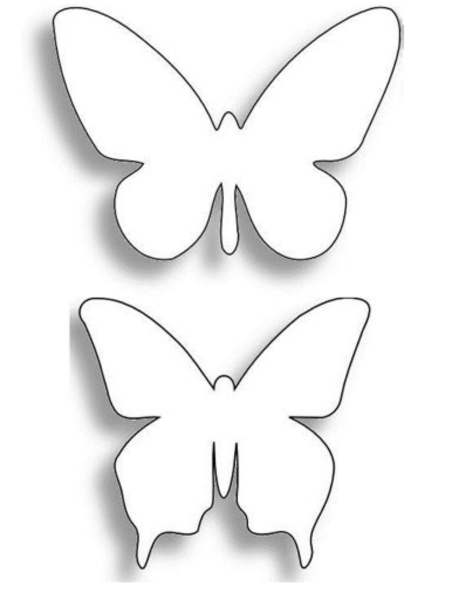
- paper outlines of a moth shape and student supplied coloring utensils
- Lab note - Animal Camouflage
Focus questions
- How do animals evade predators?
- What is camouflage?
Learning outcomes:
- Explain how color and shape can make objects wither easy or difficult to see.
- Describe camouflage as how something blends into its environment.
Suggested procedures overview:
- Put learners in groups, focus their attention, and assess their initial understanding of the focus questions.
- Activity - Cut out and color moths and then role play predators trying to find them.
Exploration -
- Ask. What is camouflage?
- Why they think it is important to some animals?
- Show students the paper moth shape and explain they must cut it out and color it to blend in with an area in the room.
- Explain that in 10 minutes some "birds" from another class are coming to "eat" the moths.
- Students use masking tape on the back of the moth to attach it to the position they chose.
- Partner class "birds" are told the shape of the moth and the rules before they begin searching.
- Any survivors are taken down one at a time so that the "birds" also learn what they missed.
Invention -
- Discuss with students why it's important for animals to be camouflaged.
- Ask. What was the form of the moth?
- What was the form of the bird?
- What is the environment in which the moth and bird operate?
- How does the form of the moth or bird affect the function?
- Ask. How does the form or function affect the animals’ ability to survive?
- Ask. Can think of other animals with similar forms and functions?
- Ask. How do scientists learn about animals?
Discover
Ask. What are example of how plants form or function affect their ’ ability to survive?
Ask. What are examples of how plants are camouflaged?
Activity 2 - Animal Survival
Materials:
- handkerchiefs for blindfolds, scarves for tying up injured leg, chips or markers to represent food
Focus questions:
- How do deer range to find enough food to survive?
Learning outcomes:
- Describe how important the ability for deer to range to find food is for their survival.
Suggested procedures overview:
- Put students in groups, focus their attention, and assess their initial understanding of the focus questions.
- Activity - role play deer and collect food while predators roam.
- Discuss the relationship of awareness, cooperation, and mobility to escape predators.
Exploration
- Ask. How do deer range to find enough food to survive?
- Tell. Some of you will roll play deers for the activity. (Other animal could be chosen as long as the students are all the same animal.)
- The objective of the deer is to survive.
- To survive, each student must gather enough food chips to live, those who don’t will parish. To make the lesson effective, not all of the students can be healthy animals. This should be explained to the students that in nature, not all animals are healthy.
- Some students will be partially blindfolded to make their vision impaired.
- Others should have other disabilities such as an injured leg which cannot be used, a virus or parasite infection which makes it difficult to move quickly,, etc.
- Ask. How in real life, some animals might get these disabilities? From their environment from other animals, domesticated, injuries from crossing fences, hit by cars and trucks, ...
- The actual game begins with spreading the food chips around the floor of the classroom.
- All of the animals start in one particular spot. When the teacher tells the learners to start, they crawl around the room gathering as many food chips as they can in the time allotted.
- The time will depend on the number of students.
- When time is called, the animals stop gathering and return to their seats.
- The teacher then writes on the board how much food they needed to survive and for how long. For example, a deer that gathered 30 food chips is healthy for the next year.
- Whereas a deer who gathered 20 food chips may be healthy for only six months.
- A deer who only gathered 10 food chips or less will probably only live for another two or three months.
- This part of the lesson is followed by classroom discussion of what happened to the deer in our forest.
- The children will note which deer were the first to perish, usually the lame deer or the very old or sick.
Invention
- Ask. What is the form of the animals.
- Is being old, sick, handicapped, or young a form?
- How does the form affect the function?
- How does the form or function affect the animals’ ability to range to find enough food to survive?
- Ask. Can you think of other animals with similar forms and functions.
- Ask. How do scientists learn about animals?
Discover
- What about animals such as cats or dogs?
- What forms effect functions related to their survival?
Activity 3 - Eat and Run
Materials:
- cereal (Fruit Loops), paper to put cereal on, white tail flag (paper), pictures or names tags of predators (you can have non-predator animals too, where the deer continue eating), information on deer
- Lab notes -
Focus questions:
- How do deer protect themselves from predators when they are grazing?
Learning outcomes:
- Describe how deer try to avoid predators with a lookout.
- Describe how important awareness, cooperation, and mobility is to escape predators.
- Describe how deer are more able to avoid predators by the form and function of their eyes, form - placement of their eyes on their heads, and function - better able to see a wider field of vision.
Suggested procedures overview:
- Put students in groups, focus their attention, and assess their initial understanding of the focus questions.
- Activity - learners browse for cereal while predators try to catch them.
Exploration
- Students will learn how deer browse for food for many hours daily yet must also be on the alert for danger.
- Select learners to play deer.
- Appoint one deer to walk among them and act as a lookout.
- Have the rest kneel down beside a piece of paper with cereal on it.
- Tell. You are deer, grazing in an open field.
- You will put your heads down like deer and eat.
- When the lookout senses danger (a learner who has a picture or name of a predator attached to their body), the lookout deer raises his white tail (a hand-held flag).
- The feeding deer must stop eating and flee to SAFETY (a predetermined, marked spot).
- The predator may tag deer, thus killing them.
- Discuss the action before allowing other students to become predator(s) and the lookout deer.
- The situation can be changed by blindfolding one or more of the deer, having some deer be handicapped or old (slower), sick, etc.
Invention
- Discuss what happened.
- What strategies did the predator try?
- List strategies the deer (prey) tried?
- Which were affective and which were not?
- Match adaptations, such as, quick runners, hooves, signals, size of ears, eyes, and etc might effect the survival of the deer to the strategies used in the list. Example:
- Compare the location of eyes on a deer's head to the location of eyes on humans heads, other heads, ... Can you discover a pattern? Eyes on predators are on the front of the head. Eyes on prey are on the sides of the head.
- How does this placement related to form and function?
- Introduce survival of the fittest (why is it beneficial to the herd?). What are some things that help/hurt animals chances of survival?
Discovery
- List other prey predator relationships and body forms and functions.
Activity 4 - Focus on Bird Beaks
Materials
- graduated cylinder, shoestring, medicine dropper, sponge strips, gummy worms, straw, chopsticks, adjustable wrench, potting soil, data tables for each student
- Graph paper
- Lab notes -
Focus questions:
- What do birds eat?
- How do they catch their food?
- Why are beaks important for birds to eat?
- How many different forms of beaks can you identify?
Learning outcomes:
- Describe three different kinds of beaks (forms) and how their form is adapted to a specific kind of feed (function).
Suggested procedures overview:
- Put students in groups, focus their attention, and assess their initial understanding of the focus questions.
- Activity use different materials to model how birds use their beaks to eat.
Exploration
- Ask. What are animal adaptations?
- Why do birds have different shaped beaks?"
- Give students a graduated cylinder as a food source.
- Also give sample beaks:
- a shoestring,
- a medicine dropper, and
- a sponge strip.
- Challenge the students to find out how many seconds it takes each beak to get 10mL of water from the graduated cylinder to the cup.
- Record the three times in a data table provided. Try several times with each beak. Calculate the average time for each beak. Record the averages.
- Give students gummy worms as their food source. Also give sample beaks:
- a straw,
- chopsticks, and
- a wrench.
- Challenge the students to find out how many seconds it takes to remove the gummy worms from the dirt using each beak.
- Use multiple trials, burying the worms after each trial.
- Record the times in the data table. Calculate the average time for each beak. Construct a bar graph of the averages.
- Give students popped popcorn as their food source.
- Provide the students with sample beaks:
- tongs,
- an envelope, and
- chopsticks.
- One member from each group will gently toss some kernels into the air.
- Challenge the students to find out how many seconds it takes to capture 20 kernels with each beak. The kernels must be caught while in the air. Try this several times.
- Record times in the data table. Calculate the average time for each beak. Construct a bar graph of the averages.
- List. Types of adaptations animals have to survive.
- Discuss. Why birds have different shaped beaks.
- Review their graphs.
- The type of bill on a bird gives a good clue to its feeding habits.
- Carnivorous birds like hawks, owls and eagles have strong hooked beaks for tearing flesh.
- Herons, egrets and kingfishers, with their straight heavy bills, spear fish, frogs, and crayfish -- then gulp them down head foremost.
- Ducks and geese dredge up roots, seeds and small water life, letting the mud and water strain away through grooves in the edges of their broad shovel-like bills.
- The woodcock probes in damp soil for earthworms with its long slender bill.
- The hummingbird uses its long proboscis to suck up nectar.
- The short stout cone-shaped beaks of such birds as the cardinal and the sparrows are adapted for gathering and cracking seeds.
- Most songbirds feed protein-rich insects to their growing young. Some use specialized bills for this job; others do not.
- The warblers have thin tweezers for picking small insect life from vegetation.
- Swallows, swifts and night hawks are flying insect nets that can open wide gaping mouths for scooping up food on the wing.
- The woodpeckers have chisel-bills that hammer holes in dead wood for grubs which they harpoon with their long barbed tongues. These bills are equipped with a special shock absorber that prevents injury to the brain.
Invention
- Make a list of the tools used and compare them to the birds who have similar beaks.
Discover
- Ask. How are the shapes of teeth different in different kinds of animals? Carnivorous have more pointed teeth, and herbivorous have more flat molar kinds of teeth.
- Match the bird and its beak Source picture to a habitat Source picture
Activity 5 - Whale Echolocation
Materials:
- blindfold and large playing area
- Lab notes -
Focus questions:
- How do whales locate their prey?
Learning outcomes:
- Model how whales use echolocation to locate prey.
Suggested procedures overview:
- Put students in groups, focus their attention, and assess their initial understanding of the focus questions.
- Activity - Model echolocation for predators to locate prey.
Exploration
- Ask. How might sound and echoes be used to track objects.
- Tell. A whale uses echolocation to track objects.
- Determine the perimeter of the role play space.
- Select a student who will become the whale and be blindfolded.
- Other students can move to any place within the boundaries, but they must stay there.
- The whale then gives the signal echo and the other students (the food) respond with location. The whale tracks the food and the food then becomes the whale.
- Variations: have learners vary the volume of response; let them move in-between responses; let them sit, stand, or lie down.
Invention
- Discuss with learners whether it is easier to track food by sight or sound?
- Ask. Do you think it would be easier for whales to track their prey by sight or sound?
- Why? There form is better adapted for the function of echolocation with sound than sound. Also the ocean is harder to see through than air is for us.
- What happens when the food is quieter or louder?
- What would be different in a real ocean situation?
Discover
- What other animals might use this system of finding food? How do bats locate prey?
Activity 6 - How do Penguins Stay Warm in Extremely Cold Water?
Materials
- large tub of ice water, newspaper, paper towels, rubber gloves, and latex gloves, (Safety concern with allergies) vegetable shortening, 4-ziploc bags, cotton balls (feathers),
- Globe
- Lab notes - with a picture of a penguin asking, "What keeps us warm?"
Focus questions:
- What keeps penguins warm?
Learning outcomes:
- Describe feathers and blubber insulate pengu9ins to keep the heat inside their bodies in water and cold and icy environments.
Suggested procedures overview:
- Put students in groups, focus their attention, and assess their initial understanding of the focus questions.
- Activity - Make a model of penguin skin with Ziploc bags, cotton balls (feathers) vegetable shortening, to demonstrate how it provides good insulation.
Exploration
- Ask. What keeps penguins warm when they are swimming in extremely cold water?
- Write your ideas on your lab notes.
- Provide learners with a latex glove to use when they insert their hands into the water and later into the larger rubber glove.
- Let volunteers submerge their covered hand into the bucket of ice water.
- As. What does the temperature of the water on your hand represent in our experiment? The penguin without protection of feathers and blubber being in ice-cold water without that protection or insulation.
- Have them put on the "feather glove" (Ziploc bag filled with cotton balls and a second Ziploc turned inside out and inserted to the already cotton ball filled bag then both zipped together).
- Have students place their covered hand in the ice water.
- Ask. Does your hand feel warmer than with the latex glove alone.
- Repeat the step with the "feather glove", but this time substitute vegetable shortening for the cotton balls (call this blubber penguin fat).
Invention
- Discuss.
- After students have all agreed that the blubber kept their hand the warmest ... Ask. What might happen if penguins didn’t have the protective layer of fat called blubber?
Discover
- What other kinds of animals do you think have blubber (or fat similar to blubber)? Why do you suppose that is?
Lab Notes for activities
Lab notes 1 - Animal Camouflage
Materials
- Moth pattern, coloring implements,
- Lab notes
Focus questions:
- What is camouflage?
Challenge
Describe the selected environment for your moth.
Cut and color your moth so it will blend into the selected environment.
What strategy did you use to camouflage your moth.
Did it provide the protection you expected?
Why do you think it did or did not.
Why it's important for animals to be camouflaged.
What was the form of the bird?
What is the environment in which the moth and bird operate?
How does the form of the moth or bird affect the function?
How does the form or function affect the animals’ ability to survive?
List two other animals and identify one of their forms and related functions.1
1.
2.
How do scientists learn about animals?
What are example of how plants form or function affect their ’ ability to survive?
Lab notes 2 - Animal Survival
Materials
- Chips (food) environment, different levels of healthy and unhealthy animals, predator
Focus questions:
- How do deer range to find enough food to survive?
Challenge
Role play a deer ranging for food.
Describe the condition of two deer.
1.
2.
Describe how a deer's health affect its ability to range and get food.
How does being old, sick, handicapped, ill, or young change the form?
How does the form affect the function?
How does the form or function affect the animals’ ability to range to find enough food to survive?
Identify another animal and its form and function.
How do scientists learn about animals?
Lab notes 3 - Eat and Run
Materials
- cereal, paper to put cereal on, white tail flag (paper), pictures or names tags of predators and non-predator animals
Focus questions:
- How do deer protect themselves from predators when they are grazing?
Challenge
Role play a deer (prey) predatory relationship.
List strategies the deer (prey) tried?
What strategies did the predator try?
Which were affective and which were not?
Being human you had a disadvantage with the placement of your eyes being different than a deers.
How does this placement related to form and function?
What are some things that help/hurt animals chances of survival?
Identify another prey predator relationships and describe the body forms and functions.
Lab notes 4 - Focus on Bird Beaks
Materials
- graduated cylinder, shoestring, medicine dropper, sponge strips, gummy worms, straw, chopsticks, wrench, potting soil, data tables
- Graph paper
Focus questions:
- What do birds eat?
- How do they catch their food?
- Why are beaks important for birds to eat?
- How many different forms of beaks can you identify?
Challenge
Model bird beaks to see how they are used for eating.
Describe three different kinds of beaks (forms) and how their form is adapted to a specific kind of feed (function).
Select three different types and use them to collect food.
Record how much food can be collected with each for a certain period of time.
Make a list of the tools used and compare them to the birds who have similar beaks.
How are the shapes of teeth different in different kinds of animals?
Brain buster
Match the bird and its beak Source picture to a habitat Source picture
Lab notes 5 - Whale Echolocation
Materials
- blind fold, whales, prey
Challenge
Role play a whale echolocating prey.
What did you discover about echolocation?
Is easier for you to track food by sight or sound?
Why?
Do you think it would be easier for whales to track their prey by sight or sound?
Why?
Lab notes 6 - How do Penguins Stay Warm in Extremely Cold Water?
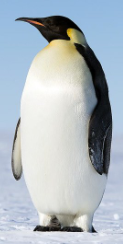
Materials
- gloves, zip Lock bags, vegetable oil, cotton balls
- Globe
Word bank: bird, beak, wings, eyes, feathers, webbed feet, blubber, snow, ice,
Focus question
Penguin asks. What keeps us warm?
Record you answer.
What did you observe?
If you were a penguin what would you want to keep you warm?
Home: Pedagogy - theory, curriculum, learning, human development, & teaching
Home: Science - knowledge base, activities, pedagogical knowledge in all dimensions