Evolution
Unit with activities & lab notes
Questioning is the foundation of all learning.
The first step in rejecting not knowing is to ask, why?
Sweetland
Overview
- Overview
- Big ideas, concepts, facts, & outcomes
- Science content concepts & outcomes
- Inquiry & science process concepts
- Pedagogical overview
- Activities sequence
- Focus questions
- Materials
- Scoring guide suggestions
- Unit activity sequence
- Activity 1 - Individual organisms in a population vary
- Activity 2 - Individual organisms in a plant population vary
- Activity 3 -
- Activity 4 - Natural selection model
- Activity 5 - Horse extinction & reintroduction
- Activity 6 -
- Lab notes
- Lab note 1 - Individual organisms in a population vary
- Lab note 2 - Individual organisms in a plant population vary
- Lab note 3 -
- Lab note 4 - Natural selection model
- Lab note 5 - Horse extinction & reintroduction
- Lab note 6 -
- Support materials
- Horse fossil pictures
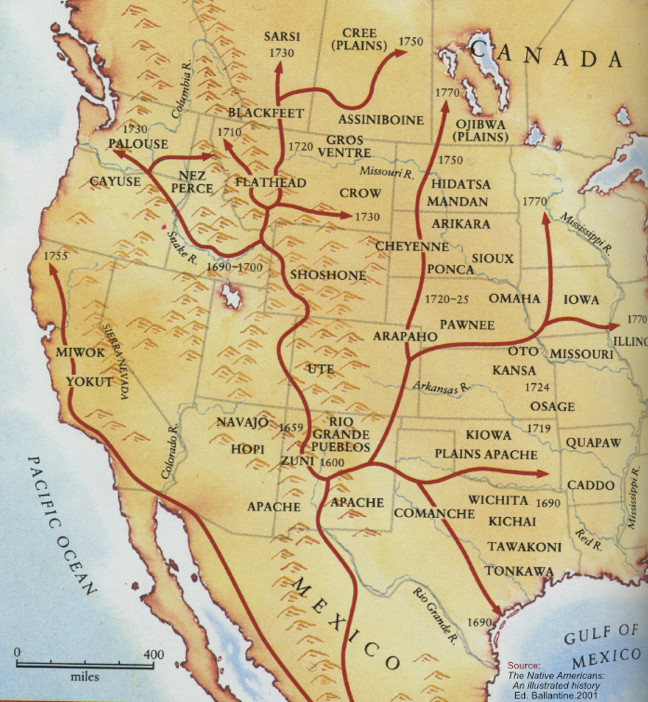
- Horse reintroduction map
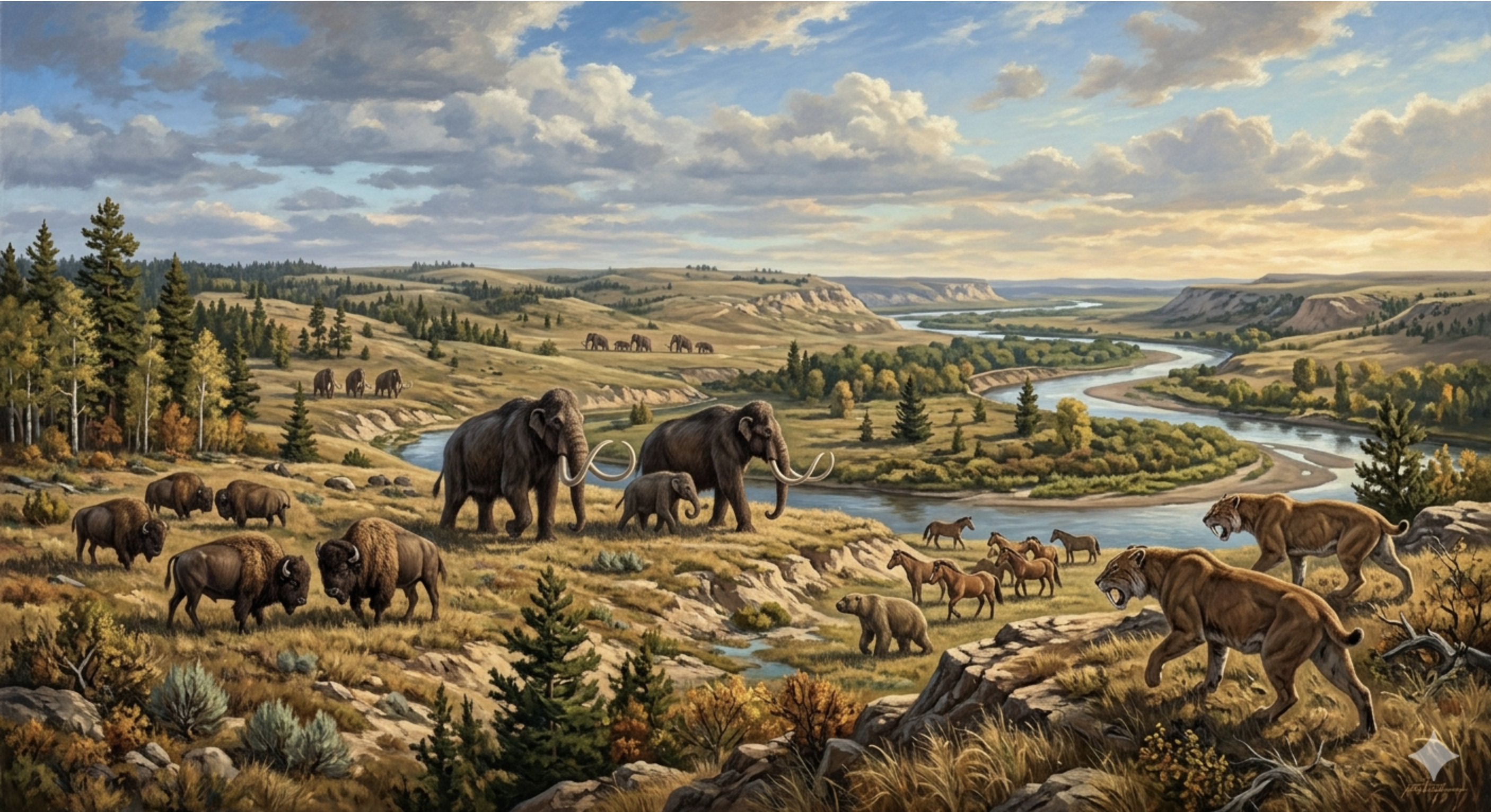
- Picture of Nebraska during the Pleistecene goggle AI generated.
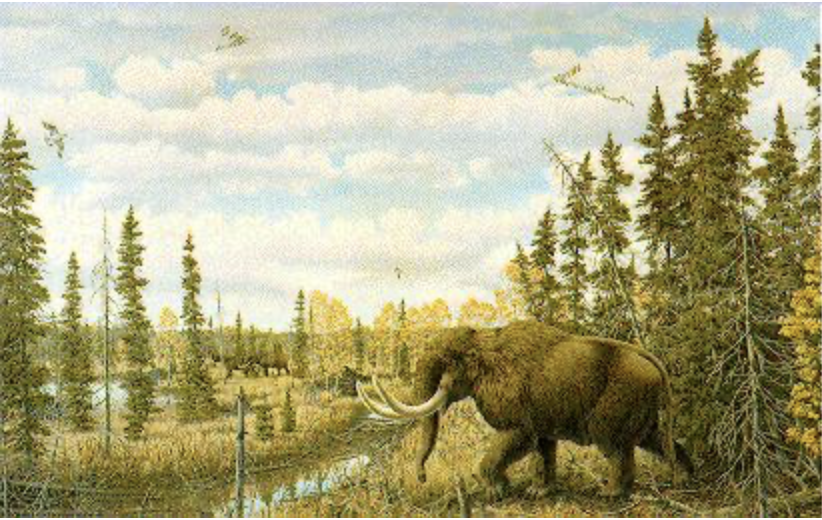
- Pleistocen Pictures - R.G. Larson Mural 16,000 YA Nebraska
- Fact sheet
A sequence of plans to facilitate a review and develop a deeper understanding of evolution.
Evolution is a series of changes, some gradual and some sporadic, that accounts for the present form and function of objects, organisms; natural and designed systems. The general idea is that the present arises from materials and forms of the past.
Evolution by natural selection explains why we have the origin of new species, why we have such a diversity of living organisms on Earth, why some animals have specialized body parts, and why some have become extinct.
The concept of natural selection includes multiple variables: variability, differential reproduction, and time. Making it challenging for children.
Learner background information
This plan is designed for learners who have prior knowledge in cause and effect, use of observations to make inferences, use cause and effect to reason with observational evidence to make explanations and models for observable and non observable events. And working in groups.
- Living organisms
- Dinosaurs teacher's guid pdf University of Nebraska State University.
Planning information
Intended learnings & learner's thinkings
See for more information on what to include in general planning
Big ideas content concepts or outcomes
(Source concepts & misconceptions)
The standards have evolution and equalibrium as cross cutting concepts. Which for this unit I am including them first.
- Evolution and equalibrium describe change. Change can be described as a difference from before and after. Equalibrium can be described as staying the same. However, equalibrium is change that happens in a way for something to stay pretty much the same. That is a pretty big idea that relates to everything.
- Evolution is a series of changes, some gradual and some sporadic, that accounts for the present form and function of objects, organisms, and natural and designed systems. The general idea is that the present arises from materials and forms of the past.
- Evolution by natural selection explains why we have the origin of new species, why we have such a diversity of living organisms on Earth, why some animals have specialized body parts, and why some have become extinct..
- The concept of natural selection includes multiple variables: variability, differential reproduction, and time. Making it challenging for children.
- Evidence of Common Ancestry (Unity) & Diversity
- Natural Selection
- Adaptations
- Biodiversity and Humans
Concepts and facts
- Biological change happens.
- Individual organisms in a population vary.
- Change can be fast or slow.
- An organism's form is related to its past.
- Present conditions such as the salt in the oceans, continental drift, erosion of land forms, changes in organisms... can be explained as gradual and sporadic.
- Evolution is the idea of the present arising from materials and forms of the past.
- Sometimes a series of changes occurs so slowly or so rapidly that it is difficult to document the evolution.
- In evolving systems, change can be gradual, steady, repetitive, irregular, or in more than one way at the same time.
- See also evolution in Life science
- Physical characteristics can determine the natural selection of an organism.
- Modern organisms may resemble extinct organisms.
- Objects and organisms can be changed to function for better or worse.
- Change can be beneficial or harmful in a changed environment.
- The proportion of beneficial and harmful traits in a population changes over time.
- Individuals with beneficial traits, variants have more offspring. Those offspring usually look like them.
- When this process happens again and again over many generations, the population looks different than it used to look.
- Changes may not be noticed on a scale of a human's life time.
- However, these changes become large as the number of lifetimes become larger.
Outcome
Use the term evolution to describe long term change as basead on natural selection of organisms based on hereditary changes of form and function in relation to their environment.
Science concepts: physical, earth, life
Big ideas:
Plants and animals are living organisms that grow, change, and reproduce. As they do there can be small changes that can be beneficial or harmful that over time can make them more successful in their enviroment or extinct.
Related concepts
- Population is community of animals, plants, or humans among whose members interbreeding occurs.
Outcome
- Describe difference and similarities of populations of plants and animals.
Anticipated learner thinkings & misconceptions
- Evolution takes millions of years. It is slow, never fast.
- Equilibrium means two things are exactly the same.
- Evolution is goal directed, it occurs for a purpose. Giraffes have long necks to reach leaves in trees or ...
- Evolution is driven by need. The Giraffes ... they wanted to reach leaves in tress so they grew long necks. Needed to reach to get food.
- People are different enough to be categorized into different races.
- Dinosaurs and prehistoric people lived at the same time.
Inquiry, process, & cross cutting concepts & skills
Observation
- When I observe I collect observations of properties that describe how different properties change (become variables) when objects and systems interact. This helps me make claims, explain what is happening, and to predict what might happen in the future.
- Inquiry concepts
- Process concepts
- Perspective concepts
Related concepts and facts
- Observational data and reasoning is used to explain interactions.
- Evidence is something that
is observed and can be used to understand what is happening and make predictions
about future changes.
- Models are structures that correspond to real objects, events, or classes of
events.
- Explanations are based on observation derived from experience or experimentation and are understandable.
- Pictures or symbols represent objects.
Cross cutting
Big ideas: See also Concepts & misconceptions
Evolution and equalibrium included above in Big ideas.
Other possible concepts
History of science and development of technology - perspective of science
See also Concepts & misconceptions also science, math, technology timeline
- People have practiced science and technology for a long time.
- Science develops over time.
- Science investigators such as
Scoring guides suggestions (rubric)
Evolution
Top level
- Use the term evolution to describe long term change as basead on natural selection of organisms based on hereditary changes of form and function in relation to their environment.
- Organisms change and become extinct, die out
Lower level
(scoring guide)
Top level
- A
Lower level
Strategies to achieve educational learnings
Based on learning cycle theory & method
Instructional Procedure
Pedagogical Overview
Activities Sequence to provide sufficient opportunities for students to achieve the targeted outcomes.
Make sure learners have the prior knowledge identified in the background information.
- Activity 1 - Individual organisms in a population vary
- Activity 2 - Individual organisms in a plant population vary
- Activity 3 - Dandelion as an evolutionary success
- Activity 4 - Natural selection model
- Activity 5 - Horse extinction & reintroduction
- Activity 6 -
- Activity 7 -
Focus question
Unit focus question:
What causes organisms to change?
Sub focus questions:
- Why did the dinosaurs become extinct?
- What does it mean humans evolved?
Materials
- collection of snail shells, a bunch of radish plants, 5 gallon bucket,
- Support materials
- Lab note 1 - Individual organisms in a population vary
- Lab note 2 - Individual organisms in a plant population vary
- Lab note 3 - Dandelion exploration
- Lab note 4 - Natural selection model
- Lab note 5 - Horse extinction & reintroduction
- Lab note 6 -
Resources
- Support materials
- Horse fossil pictures
- Horse reintroduction map
- Picture of Nebraska during the Pleistecene goggle AI generated.
- Pleistocen Pictures - R.G. Larson Mural 16,000 YA Nebraska
- Fact Sheet - horses
Lesson Plans
Activity 1 - Individual organisms in a population vary
Materials
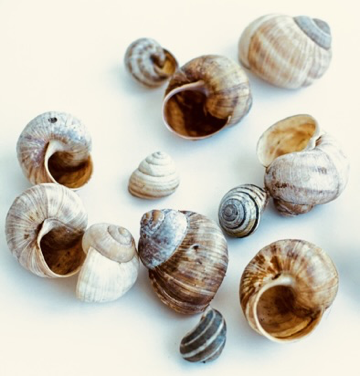
- Collection of snail shells (Craft store or online)
- Graph paper - 8 inches
- Grid 2 cm squares
- Lab note

Focus questions:
- What is the same and difference between a species of plants and animals?
- Charts can show the values of a property or a group's properties (characteristics).
Learning outcomes:
- Explore a collection of organisms and describe their similarities and differences. Explore a property of a plant species or type (family).
Suggested procedures overview:
- Put learners in groups, focus their attention, and assess their initial understanding of the focus questions.
- Activity - Examine a set of animals and describe them as a population with individuals that have similarities and differences.
Exploration -
- Put learners in pairs (groups).
- Ask. What is a population? Accept all answers. guide toward a group of similar organisms or a Population is community of animals, plants, or humans among whose members interbreeding occurs.
- Display a collection of snail shells. Ask. Could these be from a population? Accept both yes and no answers and move on.
- Let's explore them and make a list of what is similar and different for the shells.
- Suggest they measure the size of the shell and the openings.
- Explore
- As they finish have them record their observations for all to view.
Invention -
- Rgroup as a class so all can view the their observations.
- Example. Color .... Color pattern ... Shell size ..... Hole size ....
- Ask what conclusions they might make from their data.
- Color Accept all reasonable answers. Move to a conclusion ... they are all different shades of off white and browns in stripes across the spiral ...
- Review shell sizes and suggest they fall within a range of ... - .... Could also average their sizes.
- Review shell openings and suggest they fall within a range of ... - .... Could also average their sizes.
- Could discuss that there is a difference in these sizes depending on the age of the snail. So might suggest they find the ratio (Ratio is the relationship of one thing to another represented by their numerical values, numbers.) The opening to the shell size. Opening 1 cm shell size 2 cm has a ration of 1. Can use a calulator to find the ratios and see if the ratios have less range than the opening or shell sizes.
- Could make a class chart for the data.
- After the discussion off their evidence, listens for recognition that there are little differences or trait variants within the population. Most obvious is snail shells share the trait of having an opening. And the openings have variation in size, which is often something we don't notice! But, even that variation can have a similar pattern.
- To connect the relevance of this evidence to everyday life, ask if they can think of populations of familiar organisms (butterflies, carrots, squirrels, leaves).
- Discuss traits of those populations and describe little differences they have noticed. They will suggest that variation occurs naturally within any plant or animal population.
Discover
- Ask. What similarities and differences might you find with plants?
- See activity 2
Activity 2 - Individual organisms in a plant population vary
Materials:
- A bunch of radishes with tops and stems (local grocery store)
- Ruler, hand lens,
- Graph paper - 8 inches,
- Grid 2 cm squares
- Lab note
 Focus questions:
- What is the same and difference between a species of plants and animals?
- Charts can show the values of a property or a group's properties (characteristics).
Learning outcomes:
- Explore a collection of organisms and describe their similarities and differences. Explore a property of a plant species or type (family).
Suggested procedures overview:
- Put learners in groups, focus their attention, and assess their initial understanding of the focus questions.
- Activity - Examine a set of plants and describe them as a population with individuals that have similarities and differences.
Exploration
- Put learners in pairs (groups).
- Ask. What similarities and differences might you find with plants?
- Focus their attention radish plants (root, stem, and leaves from grocery store).
- Ask them to observe them in pairs or small groupsand record their findings.
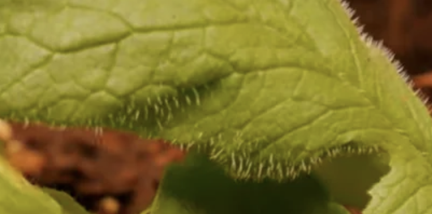
- Mention that if they look closely at the leaves they will see tiny projections that look like plant hairs. Tell them as part of their observations, to consider how they might count them. In a straight line or small area.
- Demonstrate two ways to count them. One along the edge of a ruler for 1 or 2 cms. or cutting a square hole in the graph paper and counting the number within on square .... (cm x cm or other square area). Let them pick one of two methods or have each group do a line count and square count.
- Tell them to observe and collect their data.
- Record data so all can view.
Invention
- Regroup as a class.
- Discuss similarities and differences.
- Similarities; shape, root on bottom, red root, white inside, stem, leaf ...
- Differences: size of parts, color shade differences, number of hairs ...
- Focus on the leaf hairs. Were there different numbers of leaf hairs? Could you find an average for the ratios? Ratios the number of hairs in a certain length of line or the number of plant hairs in a certain sized square. There is a difference but the difference is related to something that limits the difference or shapes the difference within a range.
- Could make a class chart for the data.
- Again, connect the relevance of this evidence to everyday life, ask for other examples of populations with similarities and differences.
- Discuss traits of those populations and describe little differences they have noticed.
- Again they will suggest that variation occurs naturally within any plant or animal population.
Discover
- What other plants have properties with functions to help them survive better?
Activity 3 - Dandelion Structure & Function
Materials:
- Dandelion
- Lab notes
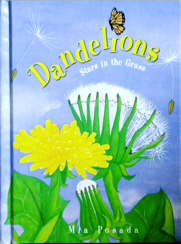 Dandelions by Mia Posada. (2000) - Very good picture book that explains the different properties of the dandelion plant, its life cycle, and hints at why its form and function make it such a dominant plant. Great pictures to use as models to create illustrations of dandelions. Also include a recipe for a Lion's teeth salad.
Plant related
- Dandelion - root, taproot, stems - hollow and not, leaves, flower, green bracts, seeds,
Focus questions:
- What is a dandelion! Do you really know the properties of a dandelion?
Learning outcomes:
- Explore a dandelion, its properties, and how their structure fits their function.
Suggested procedures overview:
- Put learners in groups, focus their attention, and assess their initial understanding of the focus questions.
- Activity - Explore and draw a dandelion, label its properties, and write and draw how their structure fits their function.
Exploration
- Put learners in pairs. Maybe double pairs to groups of four to share dandelion plants.
- Have a dandelion plant for each group.
- Let then explore their plants, draw them and label their properties.
- Read Dandelions by Mia Posada.
Invention
- Review what learners have drawn, check and label parts, describe the structures (leaves, flower, stem, roots, seeds) and their functions on the lab notes - structure & function chart.
- Discuss how it is almost the perfect flowering plant to survive. Large number of seeds, easy to produce with little energy, same with hollow stem, large leaves to produce energy, tap root to secure water. Flowers in spring and fall.
Discovery
- Continue with following activities.
Activity 4 - Evolution & adaption
- Lara Morrow & Ben Schmitz
Materials
- For each group - marbles (25 colored and 20 clear), 5 gallon buckets, H2O, and towels
- Lab notes
Focus questions:
- Evolution is the process by which animals, plants, and other living organisms are transformed into different forms by the accumulation of a series of changes over successive generations. Changes that account for the present form and function of objects.
- Natural Selection is the process where organisms better adapted to their environment tend to survive and produce more offspring. While organisms with less reproductive success decrease in frequency from generation to generation.
Learning outcomes:
- Experiment with different colored marbles to model and explain what marbles are more likely to survive the process of natural selection.
Suggested procedures overview:
- Put students in groups, focus their attention, and assess their initial understanding of the focus questions.
- Activity - Experiment with different colored marbles to model and explain what marbles are more likely to survive the process of natural selection.
Exploration
- Explain the activity of evolution process.
- Say. We are going to break into groups of 3 or 4.
- Get together and designate someone to get the materials and one person to record results.
- Your group will need to get a bucket, marbles, a towel, and ice cream pail.
- Explain to the learners that each person in their group will reach into the bucket four times and take out an organism (marble) one at a time within 10 seconds.
- They may only remove the marbles that they see first!
- After removing the marble they must add a clear marble to the bucket.
- Have the recorder write the color the marble removed each time.
Invention
- Ask. What do the results within the group.
- Ask. Why do think the clear marbles were not chosen as often as the colored?
- What is the relationship between color and clear?
- How did the colors affect your selection when you reached into the bucket?
- Can you think of an example in nature where this occurs?
- What does the data suggest about color and say birds looking for something to eat?
- What does this suggest about the process of natural selection?
- What does it sugest about about evolution.
Discover
- Ask.
- How did the marble experiment demonstrate a process of natural selection? When a certain marble was selected it left fewer of its kind to more likely reproduce and pass on its characteristics, which was why we added clear marbles.
- What is the process of natural selection?
- Do you know of examples of species that over the millions of years have undergone natural selection. Accept all answers.
- Mention horses change by natural seletion and that is the topic of the next activity. If desire share the horse fossils and horse reintroduction map... or save till the next activity.
- Might want to mention even humans have evolved and changed under different circumstances. See science timeline. 1 million - 4 million Years Ago (YA).
Activity 5 - Horse extinction & reintroduction
Materials:
- Horse fossil pictures
- Horse reintroduction map
- Picture of Nebraska during the Pleistecene goggle AI generated.
- Pleistocen Pictures - R.G. Larson Mural 16,000 YA Nebraska
- Lab notes
Focus questions:
- How did the environment change effect the evolution of horses in North America, its extinction, and reintroduction.
- How did they midwestern prairie of North America evolve?
Background information
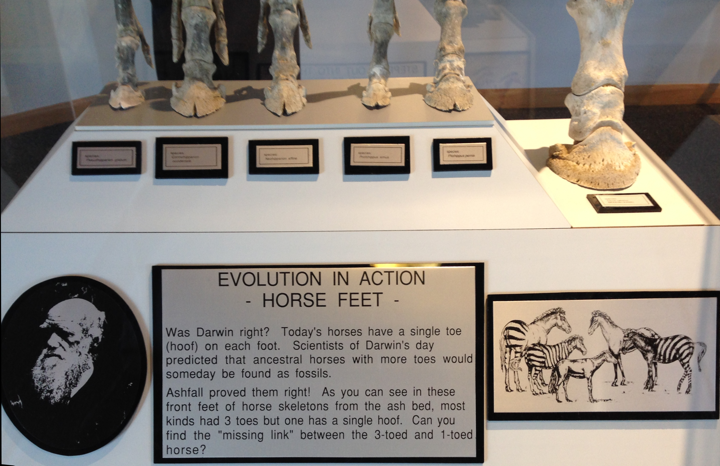
Consider why their toes changed from the multi-toed Eocene Hyracotherium to the single hoof of the Pleistocene Equus. This shift supported faster movement across hard-packed open grasslands (steppes) rather than soft forest floors.
Environment: Nebraska 100,000 years ago (during the Pleistocene Epoch) would be a vast, dynamic landscape that was far cooler and wetter than today. This environment was shaped by shifting glacial advances, featuring cool-temperate parklands, sprawling grasslands, and forests (spruce, poplar, aspen, balsam), rather than the dry, flat plains of today. A savanna-like setting dotted with springs that supported large herds of these horses alongside other megafauna. Columbian mammoth (like "Archie" at the University of Nebraska State Museum), Smilodon (sabretooth cat), ground sloths, and prehistoric bison.
Disappearance: Reflect on why, after thriving for millions of years, native American horses disappeared around 11,000 years ago, making their later reintroduction by Europeans a return to their true ancestral home.
Recent extinction of mamoth animals three extinction theories. with supporting information.
Virtual field trip for Horse Evolution at Morrill Hall
Includes Class Activity Kit with group scientific investigation and data interpretation, learners will unlock the mystery of horse evolution. Using data collected from an in-class lab activity, they will join a museum educator to construct an explanation for how horses evolved on the Great Plains of North America. By analyzing the multiple lines of empirical evidence they uncovered in their in-class lab activity, your students will literally unlock a breakout box that will help them further discover and explore the non-linear evolutionary path of horses.
Standards Supported: NCCRS-Science: SC.HS.10.5.A, SC.HS.10.5.B, SC.HS.10.5.D, SC.HS.10.5.E and NGSS: HS-LS4-1, HS-LS4-2, HS-LS4-4, HS-LS4-5
Duration: 45 minutes
Learning outcomes:
- Explain how the environment changed and horses adapted and didn't adapt to the changes.
Suggested procedures overview:
- Put students in groups, focus their attention, and assess their initial understanding of the focus questions.
- Activity -
Exploration
- Organize learners into pairs and groups.
- Have learners
Invention
- W
Discover
- If
Activity 6 -
Materials
- T
- Lab notes -
Focus questions:
- How do
Learning outcomes:
- Describe
Suggested procedures overview:
- Put students in groups, focus their attention, and assess their initial understanding of the focus questions.
- Activity -
Exploration
- Organize learners into groupsand pairs.
Invention
- Regroup as a class and groups demonstrate their projects.
- Ask.
Discover
Lab Notes for activities
Lab notes 1 - Individual organisms in a population vary
Materials
- Shell collection, ruler
- Lab notes
Focus questions:
- What similarities and differences are there between shells?
| Similarities | Differences | |
|---|---|---|
Shell 1
|
|
|
Shell 2
|
||
Shell 3
|
||
Shell 4
|
| Shell size | Opening size | |
|---|---|---|
| Shell 1 | ||
| Shell 2 | ||
| Shell 3 | ||
| Shell 4 |
Class data:
Lab notes 2 - Individual organisms in a plant population vary
Materials
- Radish plants, ruler, grid
- Lab notes
Focus questions:
- What similarities and differences are there between radish plants?
| Similarities | Differences | |
|---|---|---|
Radish 1
|
|
|
Radish 2
|
||
Radish 3
|
||
Radish 4
|
| Number of hairs | |
|---|---|
| Radish 1 | |
| Radish 2 | |
| Radish 3 | |
| Radish 4 |
Class data:
Lab notes 3 - Dandelion exploration of structure & function
Materials
- Dandelion plant
- Blank sheeet of drawing paper.
Focus question
- What are the main structures of a dandelion plant and what is their purpose?
Challenge - Draw a picture of a dandelion plant and complete the chart.
| Structure | Function (use) |
|---|---|
Flower
|
|
Seeds
|
|
Leaves
|
|
Stem
|
|
Root
|
Lab notes 4 - Evolution & adaption
Materials
Marbles (25 colored and 20 clear), 5 gallon buckets, H2O, and towels
Focus questions:
- How do animals change when the environment changes?
Challenge
- Fill the 5 gallon bucket half full of water. Put 25 colored marbles in.
- Pick an order for four people to go fishing.
- Have each person, one at a time, reach into the bucket four times and take out an fish organism (marble) one at a time within 10 seconds.
- After a colored marble is removed add a clear marble and continue.
- Record the results in the chart below.
| Clear marbles | Colored marbles | |
|---|---|---|
Draw 1
|
|
|
Draw 2
|
||
Draw 3
|
||
Draw 4
|
||
| Total |
Share results.
Record the results with other groups.
What was collectively found?
What does this suggest about the process of natural selection?
Lab notes 5 - Horse extinction & reintroduction
Materials
- Pleistocene Epoch pictures
- Extinction of horse and other megafauna in North America Fact sheet
- Pictures
Directions
Use the fact sheet and pictures to discuss the following questions.
Focus questions
- How did the environment change from the Pleistocene Epoch to modern times.
- How did they midwestern prairie of North America evolve?
- What effect did these changes have on the ancestors of the horse in North America?
- Describe the evolution of horses in North America, its extinction, and reintroduction.
Foot changes
Discuss why horses toes changed from a multi-toed to a single toed.
Conclusions
Disappearance
Discuss why, after thriving for millions of years, native American horses disappeared around 11,000 years ago, before making a come back to their true ancestral home with their later reintroduction by Europeans.
Conclusions
Support materials
How does this part of the dandelion help it survive?
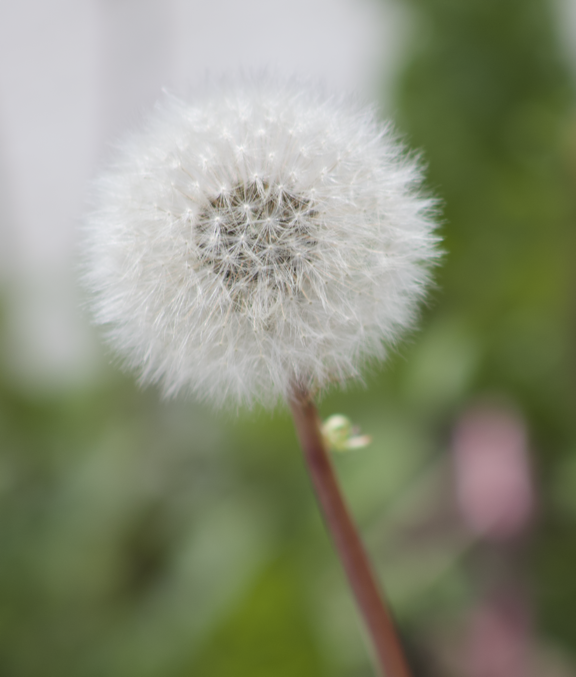
Lab - Blank Structure & Function
Focus question
- What are the main structures of
Challenge - Complete the charts.
| Structure | Function (use) |
|---|---|
|
|
|
|
|
|
|
|
|
Horse feet fossils over millions of years from Ash Falls, Nebraska
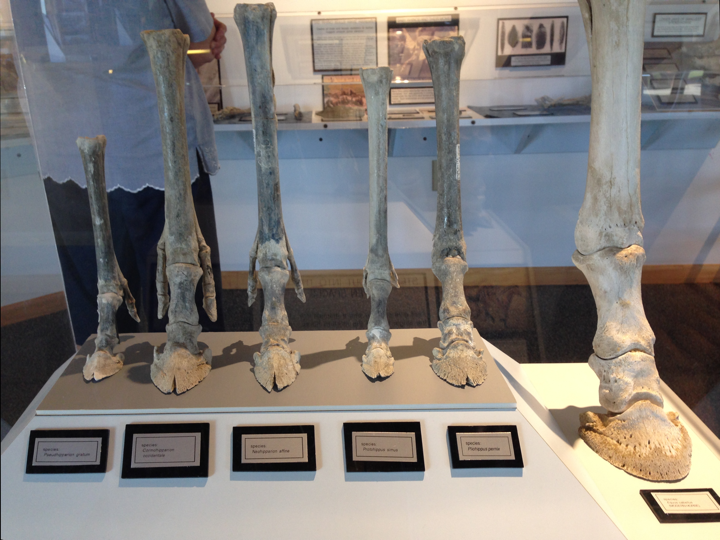
Horse feet and Darwin
Horses disappeared from the Americas and were later reintroduced.
Pleistocen pictures
R.G. Larson mural depiction o 16,000 YA Nebraska
Google AI generated image of the Pleistocene
Fact sheet
Extinction of horse & other megafauna in North America
Hyracotherium lived in the Eocene Epoch, 55-45 million YA (years ago),
Hyracotherium often called Eohippus or dawn horse is the earliest known ancestor of the modern horse, living roughly 55-45 million YA during the Eocene epoch.
It was a small, fox-sized, forest-dwelling browser with four toes on its front feet and three on its back, designed for navigating soft, dense undergrowth.
Hyracotherium evolved to a single hoof of the Pleistocene Epoch, Equus.
This change supported faster movement across harder packed open grasslands (steppes) rather than soft forest floors.
Equus, in the Pleistocene Epoch refers to several species of prehistoric, one-toed wild horses that thrived in North America and Eurasia during the Ice Age (roughly 2.5 million to 11,000 years ago).
These mammals were typically large, high-crowned grazers resembling modern horses, zebras, or asses.
They are found in the North American fossil records before going extinct around 10,000 YA.
Recent extinction of horses, mamoths, and other large North American animals include three theories.
- Humans hunted them to extinction
- Climate change
- Disease
Mid western plains environment 100,000 YA
Nebraska 100,000 YA (during the Pleistocene Epoch) would be a vast, dynamic landscape far cooler and wetter than today.
An environment shaped by glaciers that advanced and retreated. Creating cool-temperate fields scattered with trees, sprawling grasslands, and forested with spruce, poplar, aspen, and balsam.
A savanna-like setting dotted with springs that supported large herds of horses alongside other megafauna like: Columbian mammoth (like Archie at the University of Nebraska State Museum), Smilodon (sabretooth cat), ground sloths, and prehistoric bison.
Unlike today which is rather dry flat plains of grasses with few trees located along water ways.
See
- Image of the Pleistocene Epoch generated by Google AI
- Mural depiction of 16,000 YA Nebraska by R.G. Larson
- Horse feet fossils over millions of years from Ash Falls, Nebraska.
Home: Pedagogy - theory, curriculum, learning, human development, & teaching
Home: Science - knowledge base, activities, pedagogical knowledge in all dimensions