
Concepts - Beginning (p-7 years) Intermediate (7-11 years) Literate (11+)
Knowledge base of health concepts and misconceptions
Overview:
- Organization outline
- Misconceptions all ages
- Beginning concepts for human identity, anatomy, life functions, growth & development, healthy decisions, & safety
- Intermediate concepts for human identity, anatomy, life functions, growth & development, healthy decisions, & safety
- Literate concepts for
Organization outline:
Each level has six ccatgories:
- Human identity;
- Anatomy;
- Functions of life;
- Growth & development: growth & development, heredity (sex), learning, behavior, & character;
- Health: making healthy decisions, nutrition, diet, exercise, sleep, disease & treatment (includes use of foreign materials: drugs);
- Safety, hazards (poison), & risks
Misconceptions, initial perceptions or naive perceptions of all ages
Misconception - origins and eplanations
Human identity - misconceptions
- Humans are not animals.
Anatomy - misconceptions
Systems - misconceptions
- Systems operate in isolation from each other
- Muscular - Muscles are in the arms. They are not found all over the body.
- Circulatory - Blood leaves the vessels and enters parts of the body. Blood vessels end in a dead end. They do not reconnect. Blood flows backward or travels through the body to another vessel going back. Blood knows where it is needed and only goes where it is needed.
- Respiration - Air travels to the body in air vessels like blood.
The only gas we breathe out is carbon dioxide. - Digestion - Stomach is most of the area below the belt. Intestines are in the stomach. Food goes from the stomach to the blood stream.
- Metabolism - Energy is a substance in food. Food turns into energy into our body. Our body selects the food it needs. Only foods that are needed are absorbed in the intestine. Foods that we don’t need stay in the intestine and are excreted from the body. When we diet we loose the weight as energy or sweat. Most of the food we eat, leaves through the intestine. Solids not used by the body stay in the intestine or travel back to the intestine and leave through the anus. Urine and feces, are made up of left over liquids our bodies did not use.
- Human Reproduction - Fertilization happens in the vagina. The fetus does not need oxygen in the womb. The fetus does not produce waste products in the womb.
- Eye is an organ that enables vision. Parts of the eye have a specific purpose (lens, cornea, muscle, retina (cones and rods) optic nerve, eye lid, tear ducts, tears, eye lashes…). A lens can focus an image. Nerves send and receive messages that may be interpreted to by the brain. There is nothing in the eye. The pupil is a black spot on the surface of the eye. The eye sees images upright. The eye puts pictures in your head. It takes pictures and sends them to your brain like a fax machine, camera, photocopy machine. Light goes to the brain
- Skin wrinkles when in water because it makes you feel old, water makes your skin stick together, your skin shrinks, water pressure presses wrinkles, water makes the skin deteriorate.
- Joints bend. Joints allow us to move (muscles).
- Blood is a red liquid. It doesn’t have different stuff in it.
- Eye The lens focuses light on the retina and the brain looks at this image like we look at a video. More on the light, sight, & the eye
- The brains only funtion is to think.
Functions of life - misconceptions
- We are alive, but our individual body parts, systems, organs, cells are not.
Growth & development: heredity, learning, behavior, character - misconceptions
Heredity - misconceptions
- Genes are limited to a specific place - blood brain or reproductive organs. Genes are only carried for a characteristic that they do have (e.g. red hair).
- Acquired changes (e.g. muscle development, permanent sun tans) can be passed on to offspring. Genes adapt in response to an evolutionary pressure.
- Genetic inheritance involves an averaging of the genes from both parents (e.g. dark skin and white skin leads to brown skin). So each of a child's characteristics is somewhere in between those of the parents.
- The sex of a human embryo is not determined until some time after the cells start to divide.
Health: Decisions, nutrition, disease & treatment - misconceptions
Decisions - misconceptions
- We make decisions according to what we feel like doing.
Nutrition, diet, exercise, sleep - misconceptions
- I have eaten candy, caffeine, chips, and other junk food before and it didn't hurt me.
- Liquids are not foods, they are drinks, and have no energy or food value.
- Cooking oil, sugar, flour, is not a food. They are not helpful but harmful to our bodies.
- Nothing is a food until it is prepared.
- Vitamins give us energy.
- Salt is not good or essential to the body.
Disease - misconceptions
- Cold weather and rain can cause a person to get a cold or flu.
- Viruses are made from or are the same as bacteria
- All bacteria are harmful
- Antibiotics can kill viruses.
- Antibodies are maintained in the body in high numbers in case they are needed.
- Germs are about the size of dust particles in air.
- Alcohol is not related to disease.
- Caffeine, nicotine and alcohol are not drugs.
Treatment - misconceptions
- Medicines do not contain drugs.
- Medicines always work.
- Vaccines have no side effects.
Safety, hazards, & risks - misconceptions
- Alcohol is a stimulant. Coffee can make you less drunk. The more alcohol in a drink the stronger the drink regardless of volume (proportionality). Fresh air, cold water, makes you less drunk. Driving slower will compensate for alcohol in your body.
Concepts - Beginning (preschool - 7 years)
Human identity
- People are alike and different in many ways. They have different external characteristics: size, shape, hair color, skin, eyes; but we are more like other humans, than other animals.
- Humans are living and have basic needs: clean air, water, food, shelter, waste removal, like other animals.
- Humans live in groups, care for their young, ...
- Humans learn from each other by sharing ideas through communication: talking, listening, showing, watching and copying each other.
- People have always tried to communicate with each other: body language, sign, speak, and later with artifacts.
- People communicate directly (face to face) and indirectly with media.
- Humans make tools to improve their abilities.
- Technology has helped humans survive where and when they would not be able.
See also - What is human?
Anatomy
- People have different external features (size, shape, color of hair, skin, and eyes) but are more alike than like other animals.
- When something has different parts, they usually influence each other.
- A human baby grows inside its mother until birth. See also growth and development
- Senses warn people about danger.
- Muscles help them fight, hide, or move from danger.
- The brain gets signals from all parts of the body to tell what is happening. It responds by sending signals to all parts of the body suggesting what to do.
- The brain enables humans to think and send messages to other parts of the body to help them work properly.
- Skin protect the body from drying out, and harmful substances and germs from getting in.
- Indigestible food is eliminated.
- Breathing brings in oxygen people need to live.
Functions of life
- Senses are used to observe information from the environment to learn about the environment, others, and themselves. Each sense senses different attributes: smell, visual light, taste, touch, sound and provides people with different information. We can learn to improve or abilities to use our senses.
- People feel hunger and have special senses to seek, find, and use food. Eyes and nose to find food, legs and arms to get it and mouth with teeth... to eat, digestive system...
- People need food, water, air, waste removal, and a particular range of temperatures in their environments, just as other animals do.
- Food provides the body with energy and materials for growth and repair.
- People tend to live in families and communities and care for each other. All animals have offspring.
- People learn by through thinking and doing, telling and listening, showing and watching, imitating others, and deliberately trying to understand and do better with practice, effort, and strategy.
Growth and development: heredity, learning, behavior, & character
- All kinds of animals have babies, usually with two parents. Humans male and female have baby humans.
- Human babies develop for about nine months inside its mother. During that time they are nourished by their mothers with their development depending on the quality of the mother's diet and other interactions with the environment. After birth it is unable to care for itself and depends on others for its survival.
- Children grow substantially in their physical and mental abilities in their first years of life by their interactions with others and their environment.
- Humans live longer than many other animals, but all living organisms die.
- People have different feelings (sad, anger, fear) about themselves, events, and other people.
- People react to social and personal problems in different ways and some ways are more likely to help them than others.
- Talking to someone (a friend, counselor, relative, teacher) may help people understand their feelings or problems and what to do about them..
- They way people feel, their emotions, effects their behavior.
- They way people behave affects their intelligence, physical abilities and their health.
- The way people interact with their environment can be classified as risky or healthy behavior.
- Changes happen in everyone's life, sometimes suddenly, more often slowly. People cannot control some changes but they can usually learn to cope with them.
- See also disease
Health: decisions, nutrition, diet, exercise, sleep, disease & treatment
Health decisions
- The more individuals know about human identity, anatomy, life functions, growth & development, healthy decisions, & safety; the more healty they can be.
Nutrition, diet, exercise, sleep
- Individuals have some responsibility for their own health.
- Food provides energy and materials for growth and repair of all body parts.
- Eating a good diet, exercise, and rest helps people stay healthy. Good nutrition is essential to health. What people eat or use affects their well being. Some things taken into the body may hurt you. A good diet includes a variety of foods.
- Vitamins and minerals present in small amounts in foods are essential to keep the body working well.
- People react to personal problems in different ways. Some which are beneficial and helpful and others not.
- People have many different feelings about themselves, other people, and events.
- Changes happen in everyone's life. Sometimes suddenly and more often slowly. People can not control some changes, but they can usually learn to cope with them.
- Tobacco, alcohol, and other drugs, and poisons (pesticides, lead...) can harm people and other living organisms.
Exercise/sleep
- As people grow the amount of food and exercise they need to be healthy changes.
Disease & Treatment
- There are germs, or microorganisms, that are harmful and many more that are beneficial.
- Some things from the environment people take into their body can hurt them.
- Some germs, if they get inside the body, can cause disease and keep the body from working properly.
- Some diseases are caused by germs and some are not. Diseases caused by germs can be spread to other people.
- Some germs keep the body from working properly including its defense mechanisms.
- Tears, saliva, stomach secretions, blood cells, and skin protect the body by preventing some germs from getting in.
- Disease caused by germs can be spread by people who have them. Washing hands with soap and water reduces germs that might get into the body or be passed among people. Colds, is one such disease which can be prevented with good hygiene, washing, covering mouth when coughing or sneezing...
- Vaccinations and other scientific treatments protect people from getting some diseases.
- A healthy body's defense mechanisms can prevent or overcome illness.
- The body has special cells to fight germs and disease.
- Some diseases can occur only once.
- Sanitation is essential for good health.
- See also growth and behaviors.
Safety, hazards, & risks
- Safety involves freedom from danger, risk, or injury.
- Security involves feelings of confidence and lack of anxiety and fear.
- Our decisions impact our safety and security, which are basic needs of for human survival.
- Most rules are created to establish a safe environments and prevent injury at home, school, and in between.
- Knowing when and whom to ask for help reduces risk.
- Knowing when and how to say no reduces risk.
- Poisons need to be kept out of reach from younger children. Poison needs to be labeled appropriately: yuck stickers for younger children ...
Natural hazards
- Natural hazards include earthquakes, landslides, wildfires, volcanic eruptions, floods, storms, and even possible impacts of asteroids.
- Internal and external processes of the earth system cause natural hazards, events that change or destroy human and wildlife habitats, damage property, and harm or kill humans.
Risks
- Life involves risks.
Concepts - Intermediate (7 years - 11 years)
Human identity
- What makes us human
- Humans take care of their young.
- Human cells, tissue, and organs are similar to other animals and plants, but more different than plants.
- Humans make tools in a set and regular pattern. These tools collectively are technology to enhance human abilities and are responsible for advances in agriculture, manufacturing, sanitation, medicine, warfare, transportation, information processing, media communication, environmental catastrophes which have radically changed human life and culture.
- Artifacts and preserved remains provide evidence of the physical properties and possible behavior of human beings that lived long ago.
- Language, ritual, mythology, art, and technology is intrinsic for humans and shapes the way they think and do things.
- Humans invent different ways to communicate with media: skins, paper, ink, radio, TV, computer...
- Humans differ in size, shape, skin color, body proportions, hair, facial feathers, muscle strength, handedness ... However, humans are more similar in that they are a single species: can reproduce, donate blood or organs, communicate with language, create art, ...
- While many human characteristics are affected by genes and environmental factors, they are able to invent, learn, and change their behaviors.
Anatomy see also anatomy activities & instructional plans
- Humans have body systems for obtaining and providing energy, defense, reproduction, and the coordination of body functions similar to other animals.
- Organs and organ systems are composed of cells and help provide cells with their needs.
- People obtain energy from food and materials to grow and repair their body and eliminate waste.
- Respiration is the process in which energy is obtained when oxygen and food interact to yield water, carbon dioxide, and energy.
- Skin protects the body from harmful substances, other organisms, and keeps them from drying out.
- Sexual reproduction is when a single specialized cell from a female unites with a specialized cell from a male.
Organs
- Ears
- Eyes
- Teeth
- Nose
- Tongue
Systems
- Cardiovascular system: The heart circulates blood through the arteries and veins delivering oxygen and nutrients to organs and cells and transporting their waste products away.
- Digestive system: Mechanical and chemical processes that breaks down food into sizes that can be absorbed into the blood and distributed to the cells. Major components are the mouth, esophagus, stomach and intestines.
- Endocrine system: Uses hormones secreted by glands (adrenal, pineal, ovary, testis) to signal and regulate emotions, growth, reproduction, use of nutrients...
- Excretory system: Eliminates waste from the body. Includes the urinary system, which eliminates nitrogenous waste from the body.
- Immune system: Defends the body against disease causing agents.
- Integumentary system: External body covering that protects the body from injury, drying, temperature changes, and entry of foreign bodies. Includes the skin, hair, nails, sweat and other exocrine glands.
- Lymphatic system: Supplies lymph fluid to the cardiovascular and immune systems. Returns lymph fluid that leads from the circulatory system and returns it. Associated with white blood cells and the immune system defending against disease causing agents.
- Muscular system: Muscles enable the body to move, offers protection, and body form.
- Nervous system: Include the brain, nerves, and spinal cord. Collects and responds to internal and external information from the senses via nerves, hormones, and chemical signals and processes them, mostly in the brain, which sends information to muscles and glands that cause physical actions.
- Reproductive system: The sex organs required for procreation of offspring.
- Respiratory system: The nose, mouth, and the trachea that bring air into the lungs and supply the body with oxygen and remove carbon dioxide.
- Skeletal system: Bones support and protect the body and its organs and provide shape and structure to interact with muscles for movement.
Functions of life
- Interactions among the senses, nerves, and brain make possible the learning that humans use to adapt.
Growth and development: heredity, learning, behavior, & character
Growth, development, & heredity
- The length and quality of human life are influenced by many factors (sanitation, diet, medical care, sex, genes, environmental conditions, and personal health behaviors
- Human reproduction is sexual reproduction and results with the fertilization of a female egg cell (ovary) by a male a sperm cell (testes). This results in almost half of the genes coming from each parent.
- Contraception impair sperm movement, block sperm path to the egg, prevent the release of an egg cell from the ovary, and prevent fertilized egg from implanting in the ovary successfully.
- Development is the same and different for each person depending on genes, environmental factors.
- Humans age and their muscles and joints become less flexible, bones and muscles lose mass, energy diminishes, and senses less able. A women stops releasing eggs and can not reproduce.
- Developing embryos and infants are subject to infections, genetic effects, mothers diet, use of alcohol, cigarettes, other drugs, and environmental effects. Inadequate child care may lead to lower physical and mental growth, hence less ability.
Learning and behavior
- Interactions among the senses, nerves, and brain make possible the learning that humans use to adapt. Brain receives and sends signals to enable humans to think and influence the body to work properly.
- People have different interests, motivations, and abilities.
- People use their memory of past experiences to make decisions.
- Many skills can be practiced until they become automatic.
- People tend to repeat behaviors that feel good or have pleasant consequences and avoid behaviors that have bad or unpleasant consequences.
- Learning means using what one already knows to make sense of new experiences or information.
- When people attend to one signal it reduces their ability to attend to others at the same time.
- Different people handle their feelings in different ways.
- Sometimes people don't understand why they or others act or feel the way they do.
- Physical health can affect the emotional well-being and emotional well-being can affect physical health.
- One can respond to strong feelings by either seeking or avoiding similar situations.
Health: decisions, nutrition, diet, exercise, sleep, disease & treatment;
Decisions: making health decisions
At end of this level students may know the information expected for 11+ literate, but their application will be linear, cause and effect as one dimensional, not including multiple variables for cause and effect, less systematic and hence less comprehensive.
- Accurate and quality information is needed to make good decisions. In health that includes: understanding what is human, the body, it's anatomy, functions of life, growth, and development well enough to care for your self and others to attain and maintain healthy bodies: physical, emotional, mental, and social. To do so one must be able to describe, analyze, predict, and compare how different variables, learning, nutrition diet, exercise, sleep, choice of behaviors, genetics, injuries, health status, illness, safety, natural disasters, risks, will impact people in different situations or conditions.
- Analysis of influences is an essential part of decision making. Internal influences such as: personal values and beliefs and external influences such as: family, peers, culture, media, technology, public, government and other factors on health behaviors that impact behaviors and choices people make must be considered, both positive and negative to better insure the likelihood of engaging in healthy or unhealthy behaviors.
- Access to valid information, resources, and services is necessary to maintain and enhance health. People must know what resources are available at home, at school, in the community and globally and how to use them to determine what services are reliable and might have a valid chance to enhance health.
- Communication is necessary to maintain and enhance health by avoiding or reducing risks for self and others. Effective communication between family members, peers, professionals, and others will seek and attain information, clarify, learn, seek help, collaborate, negotiate, debate, resolve conflict, and use refusal strategies to determine and implement safe and healthy decisions.
- Decision-making skills enhance health with the examination of issues with accurate and quality information (see above) without bias (see also analysis of influences) or barriers to sufficiently examine them for their causes and effects, generate usual and novel alternative choices, solutions, and courses of action, predict short and long term positive and negative consequences for each alternative, generate any possible collateral related issues and consequences for each alternative, make decisions and plan for its implementation, present an argument for and against its implementation, implement it, evaluate the effectiveness of the choice, its implementation, and results.
- Setting and achieving good goals can enhance health. Health goals are set when we assess our personal health practices and overall health status and find a need for improvement, set a goal that is appropriate for the need and assumes appropriate risk, develop a plan to attain it, implement the plan, monitor progress toward achieving the goal, and work it into an effective long-term personal health plan.
- There are health-enhancing behaviors that will maintain or improve people's health and risky behaviors that will reduce health and even cause death. It is each individual's responsibility to analyze their choices of behavior to determine if a behavior will enhance health or devalue it, then make choices to avoid or reduce risks.
- People affect other peoples health the way they behave, what they advocate, how they act personally, interact with family, peers, and community. Influence (see above) will support decisions and choices we and others make. Therefore, it is important to realize the importance of influence in our decision making processes so when we communicate health information and advocate for a particular idea, we are accurate and communicate to others in a manner that achieves a positive result.
Nutrition, diet, exercise, sleep
- The length and quality of human life is influenced by many factors: sanitation, diet, medical care, exercise, genes, sex, environmental conditions, personal health choices,
- Food provides energy and materials for growth and repair of body parts.
- Vitamins and minerals are essential to keep a body functioning well.
- Good nutrition include eating a variety of foods, eating less sugar, and eating less fat.
- As people grow the amounts and kinds of food and exercise needed by the body may change.
- Physical health can affect people's emotional well-being. Likewise emotional well-being can affect physical health.
- Different substances can damage the body and how it functions.
- Such substances include tobacco, alcohol, over the counter medicines, and illicit drugs.
- Prescription drugs, can be beneficial, but any substance can be harmful if used inappropriately.
- The use of tobacco increases the risk of illness.
- Tobacco, alcohol, other drugs, and certain poisons in the environment (pesticides, lead) can harm people and other living organisms.
Exercise/sleep
- Regular exercise in important to the maintenance and improvement of health.
- The benefits of physical fitness include maintaining healthy weight, having energy and strength for routine activities, good muscle tone, bone strength, strong heart/lung systems, and improved mental health.
- Personal exercise, especially developing cardiovascular endurance, is the foundation of physical fitness.
Disease & Treatment
- The body defends against germs with tears, saliva, skin, blood cells, stomach secretions.
- Specific germs, or microorganism, cause specific diseases.
- Viruses, bacteria, fungi, and parasites may infect the human body and interfere with its functions. A person can repeatedly catch a cold, because there are many different viruses that cause the same symptoms.
- A healthy body can fight off most germs. However, there are some germs that will interfere with the body's defenses. There are normal ranges for body measurements (temperature, heart rate, what is in the blood and urine) that are used to diagnose peoples state of health.
- Drugs are prescribed by doctors or illegal substances
- Tools (thermometers, ex-rays, MRI,) help us collect data from inside the body. Technology has made it possible to replace and repair some body parts. Sanitation measures (sewers, landfills, quarantines, food handling) are important to control the spread of disease.
- Improved sanitation has saved more people that any medical treatment.
- Vaccines cause the body to create an immunity to a disease without actually causing the disease.
- White blood cells engulf invaders or produce antibodies that attack or mark foreign substances for other white cells to kill. Antibodies will stay in the body and fight other similar invaders.
- Often human beings don't understand why others act the way they do and sometimes they don't understand their own feelings and behavior.
- Different individuals handle their feelings in different ways and can have different feelings in the same situations.
- One way to respond to a strong feeling, either pleasant or unpleasant, is to think about what caused it and then consider whether to seek out or avoid similar situations.
- Physical health can affect people's emotional well-being and emotional well-being can affect physical health.
- Society has broad general standards and values most people agree with and deem acceptable, however the standards used to judge behavior vary for different settings, groupings and may change with time and different political and economic conditions.
Safety, hazards, & risks
- The potential for accidents and the existence of hazards imposes the need for injury prevention.
- Safe living involves the development and use of safety precautions and the recognition of risk in personal decisions.
- Injury prevention has personal and social dimensions.
- Sanitation is essential for good health: such as sewers, landfills, quarantines, safe food production and handling to control the spread of organisms that may cause disease.
- The environment may contain hazardous materials that are harmful for living organisms including humans. Therefore, to maintain good health people must monitor the soil, air, and water to insure its quality is safe.
- Toxic substances, dietary habits, and some personal behavior may be bad for one's health. Some effects show up right away and others years later. Avoiding toxic substances, ... increases the chances of living longer.
Natural hazards
- Human activities also can induce hazards through resources acquisition, urban growth, land-use decisions, and waste disposal.
- Such activities can accelerate many natural changes.
Risks
- Risk analysis considers the type of hazard and estimates the number of people that might be exposed and the number likely to suffer consequences. The results are used to determine the options for reducing or eliminating risks.
Concepts Literate (11+)
Human identity
- What makes us human
- Artifacts and preserved remains provide evidence of the physical properties and possible behavior of human beings that lived long ago.
- Patterns of human behavior are similar to other vertebrates.
- Humans have body systems for obtaining and providing energy, defense, reproduction, and the coordination of body functions similar to other animals.
- Fossil and molecular structure support the idea humans evolved from earlier species and are continually evolving.
- Humans are a singular species is supported by reproductive ability across all humans and similarity of DNA sequences.
Anatomy
Cells, tissues, organs
- Tissue: four kinds of tissue: connective, epithelial, nervous, muscle.
- Epithelial has six characteristics 1. has no blood vessels, capillaries ... 2. sensory neurons are present 3. make a gliding surface layer so that epithelial cells slide and slough off as deas cells are replaced so it makes a closed barrier from the external environment. 4. is able to stretch (bladder) distend & contract without compromise 5. Makes a tight barrier to withstand mechanical stress Different from endothelial cells 6. are different than endothelial cells that line the inside of structures (blood vessels).
Systems
- Cardiovascular system: The heart circulates blood through the arteries and veins delivering oxygen and nutrients to organs and cells and transporting their waste products away. The movement of all substances to or from the cells, where they are needed or produced, is a response to changing needs.
- Digestive system: Mechanical and chemical processes that breaks down food into sizes that can be absorbed (molecules) into the blood and distributed to the cells. Major components are the mouth, esophagus, stomach and intestines.
- Endocrine system: Uses hormones secreted by glands (adrenal, pineal, ovary, testis) to signal and regulate emotions, growth, reproduction, use of nutrients, and other changes. Hormones are chemicals from glands that affect other body parts in response to danger, regulate growth development, reproduction, and other changes.
- Excretory system: Eliminates waste from the body. The intestinal tract removes solid wastes, and the skin and lungs rid the body of heat energy. The urinary system eliminates dissolved nitrogenous waste molecules from the body.
- Immune system: Defends the body against disease causing agents, microscopic organisms, and foreign substances that enter enter the body and some cancer cells that develop from within.
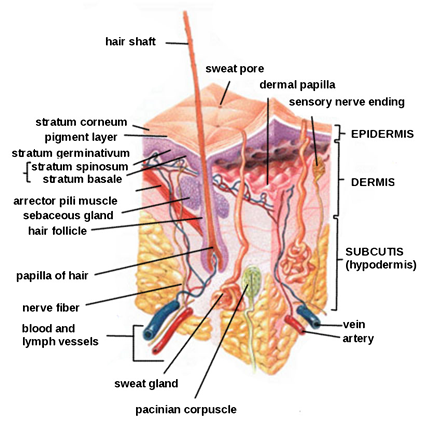
- Integumentary system skin is the largest external organ of the body and the body in general (liver is the largest internal organ).
Skin protects the body and provides sensual stimulation.
- Covers and protects the body from injury as a closed surface with a cushion below and can repair itself. A closed water proof surface that keeps water out and in so the body does not dry out (dehydrate).
- Protects from ultra violet (UV) radiation. Melanin is a pigment that provides color and offers protection from ultra violet (UV) radiation that causes skin cancer. The lighter the skin the less protection.
- The skin and lungs help regulate body temperature. The amount of heat energy exchanged with the environment varies with temperature. Temperature changes cause blood vessel to dilate. When the body cools they contract to exchange less heat and when the body warms, they expand to exchange more heat. Perspiration also regulates body temperature with sweat glads releasing sweat to the skin surface where it cools the skin as it evaporates from the surface when it is exposed to air.
- Blocks the entry of foreign bodies like dirt and pathogens: bacteria and viruses and releases immune cells (macrophages) that destroy pathogens.
- Sensation. Senses changes in the environment: pressure (pacinian corpuscle) , pain, hot, and cold as nerve cells in the dermis react to environmental stimulus.
- Vitamin D synthesis. Vitamin D is made in the skin when it is exposed to UV radiation.
- Reacts emotionally with goose bumps, raising hairs, blushing, going pale.
Skin includes: the skin, hair, nails, sweat, sebaceous glands, and exocrine glands.
- Skin is among the body's most complex organs. It has three layer: epidermis, is the paper thin visible top layer, below it the dermis, and below that the subdermis. In a square inch of skin there is: 20 blood vessels, 65 hairs and muscles, 78 nerves, 78 sensors for heat, 13 for cold, 160 for pressure, 100 sebaceous glands, 650 sweat glands, 1300 nerve endings, and 19,500,000 cells. Sweat glands help eliminate wastes and cool the body. On a hot day releasing 2500 calories of heat, enough to boil 6 gallons of water.
- Hair protects the skin from UV radiation, dust and other particles (eye lashes, eye brows, nose), and helps maintain body heat. Living cells in the epidermis make new hair, gut the hair is made of dead cells. There are are about 5 million hair follicals on an adult body with men having a few 100 000 more than women.
- Sweat is 99% water which evaporates from the skin's surface and cools it. Sweat is produced in two types of glands: eccrine and apocrine. Eccrine glands are all over the surface of the body and apocrine are in the arm pits and perianal and genital areas. Eccrine sweat is mostly water and salt (NaCl). However, it also includes dermcidin, an antibiotic peptide that effects bacteria growth and may fight infection. Apocrine sweat is associated wiht hair follicules and comes from cells deeper in the body. It can include body oils that become smelly when it acted on by bacteria. However, they produce less sweat, but it is spread over the body by the greater production of sweat in the eccrine glands. Men sweat two times the amount of women. The amount of sweat decreases with age. Hematohidrosis is when blood vessels rupture and flow into the sweat glands to literally sweat blood. Sweat has been orange, blue, and other colors. Causes unknown or related to drugs taken. Smell of sweat can be differentiated between meat eaters and non meat eaters and people who are scared or not. Sweat can also smell differently when people are ill. However, each person's sweat is a unique blend of 373 volatile compounds which is consistent over time from person to person. Cystic fibrosis can be diagnosed by testing sweat.
- Sebaceous glands produce oil (sebum) used to keep hair moist.
- Blood vessels supply oxygen, nutrients, and remove waste.
- Head lice are tiny parasitic insects spread by head to head contact or sharing brushes, combs, or hats. Treatment and more information.
- Fingernails and toenails are tightly packed dead cells of keratin.
Skin Care
- Wash skin twice a day with a mild soap and water. Removes dirt, bacteria (that causes odor), viruses.
- Avoid touching near your eyes, nose, mouth, cuts, and sores so bacteria, viruses, and harmful chemicals do not enter.
- Wear protective clothing: hats, shirts, pants and use sun screen on exposed skin. Particularly between 10 A.M. and 4 P.M. and remember UV rays are more powerful in higher altitudes. Never use tanning beds.
- Acne is caused when pores clog and bacteria creates inflammation and pus. Keep pores clean by washing, not using excessive amounts of cream and make-up and washing make-up off regularly. If acne is serious, medication can be described by a dermatolgist.
- Eat a well balanced diet and be sure Vitamin A (retinol) is sufficient.
- Body piercing and tattoos causes openings for pathogens. Bacteria, viruses (hepatitis B, hbepatitis V, and HIV) can enter with nonsterile needles or while healing with exposure. Particularly vulnerable are piercings that pass through skin, near bone (eyebrow), blood and lymph vessels where disease can spread or located in places with high volumes of bacteria (mouth).
- Other skin problems include: warts (viruses) that are spread by contact. Fungal infections (athlete's foot, ringworm) spread by contact with public showers and clothes. Boils (infected hair follicles) spread by squeezing. Moles are mostly harmless a few develop into melanoma (skin cancer). Vetiligo (patches of skin do not have melanin) and are extremely sensitive to UV burning. Ermatiti or eczema inflammed scaly itchy skin caused by allergic reaction. Moisturizure, anti-inflammatory drugs, and other medication.
Hair care
- Brushing hair removes dust and distributes natural oils evenly. Good nutrition is essential for healthy hair particularly protein. Excessive heat (curling irons...) harsh chemicals (dyes, bleach, sprays ...) can make hair thin, brittle, and dry.
Nail care
- Care includes cleaning and trimming nails so they are above the skin level and keep cuticles pushed back. Toenails should be cut straight across. Avoid cuts or breaks in the nail or near nails as this can allow pathogens to enter and cause an infection. Care for cuts or breaks as you would any wound by cleaning and using an antiseptic.
- Lymphatic system: Supplies lymph fluid to the cardiovascular and immune systems. Returns lymph fluid that leads from the circulatory system and returns it. Associated with white blood cells and the immune system defending against disease causing agents. White blood cells are specialized cells and the molecules they produce identify and destroy microbes.
- Muscular system: Muscles enable the body to move, offers protection, and body form.
- Nervous system: Include the brain, nerves, and spinal cord. Collects and responds to internal and external information from the senses via nerves, hormones, and chemical signals and processes them, mostly in the brain, which sends information to muscles and glands that cause physical actions. Different sense receptors are specialized for particular kinds of information
- Reproductive system: The sex organs required for procreation of offspring. It takes nine months for a human embryo to develop. Embryos are nourished by their mother. The substances a mother takes affects how well or poorly the baby develops. People are able to have children before they can care for them.
- Respiratory system: The nose, mouth, and the trachea that bring air into the lungs and supply the body with oxygen and remove carbon dioxide related to oxidation of food. The skin and lungs transfer thermal energy from the body.
- Skeletal system: Bones support and protect the body and its organs and provide shape and structure to interact with muscles for movement.
Microbiota
- Microbial ecosystems are complex communities of bacteria, fungi, and viruses that inhabit the body.
- Microbial ecosystems inhabit the skin, oral cavity, vaginal cavity, lungs, and the lower gastrointestinal track (GI).
- The microbiome is more diverse and changeable than the human genome. Which makes it challenging to predict how the microbiota interacts with the human body and what those interactions will cause.
- Bacterial communities are affected by diet, lifestyle, antibiotic treatments, and fecal microbiota transplants (FMTs).
- Bacterial communities inhabit all animal species; where over millions of years they have evolved beneficial relationships for the microbes and organisms.
- Many of the microbes perform similar functions in different species.
- Microbiota has been associated with: anxiety, depression, autism spectrum disorder (ASD), epilepsy, Parkinson's disease, amyotropyic laterl sclerosis (ALS), and Alzheimer's disease.
- Changes in microbiota have been shown to relieve illnesses. However, the microbiota may not cure illness, but seem to affect resilience to maintain healthy conditions.
Functions of life
- Human body is a complex system of cells grouped into tissues, organs, and systems each with specialized functions which can be understood in relation to their functions for the organism in maintaining life.
- Cells must communicate to coordinate their activities. They secrete molecules that spread to nearby cells and can be carried by the circulatory system in the bloodstream to all parts of the body. Nerve cells transmit electrochemical signals that carry information faster than the circulatory system. Some drugs mimic or block the molecules used to communicate and affect the operations of cells, brain and body.
- Many patterns of development from DNA to genes to cells, tissues, organs, and organism suggest a relatedness of organisms through evolution.
- Like other organisms people have systems that interact to obtain energy from food and use it for defense, reproduction, and coordinate other body functions.
- Thinking of things as systems causes us to think about how all the individual parts relate to each other with output from one as input to another to regulate systems for the benefit of the whole organism.
- For a body to use food for energy (oxidize, use oxygen and sugar to create energy, water, and carbon dioxide) to build and repair it must digest food into molecules to be transported and absorbed into the cells. See digestion.
- Metabolism to burn food for the release of energy stored in it oxygen must be supplied to cells, and carbon dioxide removed. Lungs take in oxygen for the oxidation of food and eliminate carbon dioxide. The urinary system disposes of dissolved waste molecules, the intestinal tract removes solid wastes, and the skin and lungs transfer thermal energy from the body. The circulatory system moves all these substances to or from the cells where they are needed or produced, responding to changing needs.
Growth and development: heredity, learning, behavior, & character;
- Behavior is affected by both inheritance and experience.
- Sex drive is a natural human function that requires understanding.
- Human reproduction is sexual reproduction and results with the fertilization of a female egg cell (ovary) by a male a sperm cell (testes). This results in almost half of the genes coming from each parent.
- After fertilization the cell divides and a small cluster of cells embed on the wall of the uterus. It develops, receives nourishment, and eliminates wastes by transferring between its blood and the blood of its mother.
- Successive generations of embryonic cells form by division there can be small differences in the environment that can cause activation or inactivation of different DNA parts with different information.
- Artificial means to prevent or facilitate pregnancy raises moral and ethical issues which may not be resolved by social or legal means for the satisfaction of all.
- The length and quality of human life is influenced by genes and environment: sanitation, diet, drug use, pollution, medical are, personal health and behavior.
Learning, behavior, & character
- The level of skill a person attains depends on innate abilities, the amount of practice, and the use of appropriate learning technologies.
- Interactions of the senses, nerves, and brain make learning possible as people predict, analyze, and respond to changes in their environment.
- Learning usually results from two perceptions or actions occurring at the same time.
- The more often the same combinations occurs, the stronger the mental connection between them.
- Occasionally a single vivid experience will connect two things permanently in people's minds.
- Emotions can contaminate or thinking. Beliefs, self-interest, memory, sloppy evolution, allow people to be gullible, subject to superstition, manipulated, and open to faulty reasoning. Consequences result in poor decisions that can affect all aspects of life, health, conflict, economic decisions, and even war. Experiments such as having two different groups of people read two different sets of words before doing identical task, like viewing a person's actions, reading a text, watching a video, resulted in opposing conclusions by each group that was presented with the different lists. Bad moods prompt negative thougths.
- Contextual memory pieces together what is happening now, relates it to memories adding detail by drilling into memories if they are available. It is important that what is necessary is available first or the person will be confussed and likely to make a mistake or create misinformation. This i why pilots use checklists. Why people do better when they are tested where they learn. Learn something at home, forget when at school, but when get back home, remember it again.
- Language and tools enable people to learn complicated and varied things from each other.
- Development and use of technologies can sustain, prolong, or terminate life,which raise moral and ethical issues that may or may not be resolved by social and legal means for the satisfaction of all.
- The complexity of the human brain enables the creation of technology, literary pieces, aesthetic works and a scientific understanding of the world which provides the capacity to generate and communicate knowledge that changes the world and history.
Healthy decisions:
Nutrition, diet, exercise, sleep, disease & treatment
Decisions: making health decisions
- Accurate and quality information is needed to make good decisions. In health that includes: understanding what is human, the body, it's anatomy, functions of life, growth, and development well enough to care for your self and others to attain and maintain healthy bodies: physical, emotional, mental, and social. To do so one must be able to describe, analyze, predict, and compare how different variables, learning, nutrition diet, exercise, sleep, choice of behaviors, genetics, injuries, health status, illness, safety, natural disasters, risks, will impact people in different situations or conditions.
- Analysis of influences is an essential part of decision making. Internal influences such as: personal values and beliefs and external influences such as: family, peers, culture, media, technology, public, government and other factors on health behaviors that impact behaviors and choices people make must be considered, both positive and negative to better insure the likelihood of engaging in healthy or unhealthy behaviors.
- Access to valid information, resources, and services is necessary to maintain and enhance health. People must know what resources are available at home, at school, in the community and globally and how to use them to determine what services are reliable and might have a valid chance to enhance health.
- Communication is necessary to maintain and enhance health by avoiding or reducing risks for self and others. Effective communication between family members, peers, professionals, and others will seek and attain information, clarify, learn, seek help, collaborate, negotiate, debate, resolve conflict, and use refusal strategies to determine and implement safe and healthy decisions.
- Decision-making skills enhance health with the examination of issues with accurate and quality information (see above) without bias (see also analysis of influences) or barriers to sufficiently examine them for their causes and effects, generate usual and novel alternative choices, solutions, and courses of action, predict short and long term positive and negative consequences for each alternative, generate any possible collateral related issues and consequences for each alternative, make decisions and plan for its implementation, present an argument for and against its implementation, implement it, evaluate the effectiveness of the choice, its implementation, and results.
- Setting and achieving good goals can enhance health. Health goals are set when we assess our personal health practices and overall health status and find a need for improvement, set a goal that is appropriate for the need and assumes appropriate risk, develop a plan to attain it, implement the plan, monitor progress toward achieving the goal, and work it into an effective long-term personal health plan.
- There are health-enhancing behaviors that will maintain or improve people's health and risky behaviors that will reduce health and even cause death. It is each individual's responsibility to analyze their choices of behavior to determine if a behavior will enhance health or devalue it, then make choices to avoid or reduce risks.
- People affect other peoples health the way they behave, what they advocate, how they act personally, interact with family, peers, and community. Influence (see above) will support decisions and choices we and others make. Therefore, it is important to realize the importance of influence in our decision making processes so when we communicate health information and advocate for a particular idea, we are accurate and communicate to others in a manner that achieves a positive result.
Nutrition, diet
- The length and quality of human life are influenced by many factors (sanitation,nutrition, diet, exercise, sleep, medical care, sex, genes, environmental conditions, personal health, and behaviors.
- Good health requires monitoring the air, water, and soil to assure their safety.
- The amount of food a person requires varies with body weight, age, sex, activity level, and the natural body's efficiency.
- Food provides energy and nutrients for growth and development.
- Nutrition requirements vary with body weight, age, sex, activity, and body functioning.
- The amount of food energy (calories) a person needs varies with body weight, age, sex, activity level, and natural body efficiency.
- The brain is 80% water. A dehydrated brain has more difficulty thinking and react quickly. Dehydration also makes you more irritable. Even slight dehydration can cause problems. A SPECT brain scan of a famous bodybuilder looked like he was a drug addict, when he was significantly dehydrated. When he was adequately hydrated, his brain looked much better.
- See disease: example chronic stress...
Exercise, sleep
- Lack of sleep hinders performance. Sleep deprivation impairs motor function, which reduces coordinated making it more likely to strike out at bat or to shank a drive on the golf course, causes poor decision making so you don't make the best on-field decisions or remember new plays. Because lack of sleep reduces glucose metabolism. A Stanford University study found that after getting extra shut-eye for a two week period, basketball players shaved an average of one second off their sprint time, improved their free-throw shooting by about 10%, and upped their three-point shooting percentage by more than 10%.
- Regular exercise helps to maintain a healthy heart/lung system, good muscle tone, and bone strength.
Disease & Treatment
- Sex is also a prominent means of transmitting diseases.
- Sexually Transmitted Diseases (STD) can be prevented through a variety of precautions.
- Special cells and the molecules they produce identify and destroy microbes that happen to get inside the body.
- People differ in their ability to cope with stressful situations.
- Faulty genes can cause body parts or systems to work poorly. Some genetic disorders require faulty genes from both parents.
- Cancer is the result of uncontrolled division. Exposure of cells to certain chemicals and radiation increases mutations and therefore the chance of cancer.
- The immune system (see also systems ...) is designed to protect against microorganisms and foreign substances enter the body from outside and cancer cells that develop from within.
- Some allergic reactions are caused by the body's immune response to environmental substances, which alone are usually not harmful. Sometimes the immune system may attack its own cells.
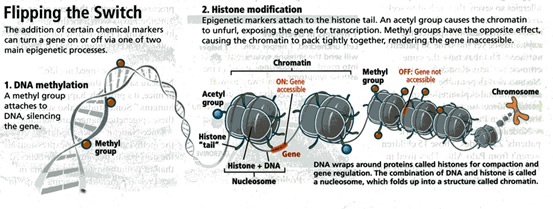
- Asthma is an allergic reaction that can be epigenetic, caused by genetic changes promoted by environmental conditions). The FOXP3 gene has chemical markers. Two markers are 1. methyl group which tells T cells to turn off and 2. acetyle groups which tell T cells to turn on. Air pollution and second-hand smoke changes FOXP3 in T cells by adding more methyl groups which switch off its ability to regulate T cells, therefore, causing T cells to initiate allergic reactions. These changes do not rewrite the genetic code, but alter the surface. However, these changes can be passed on to a mother's child and even to a grandchild in the following generation.
Discover Something in the Air September 2015 by Melissa Pandika
- Alzheimer - Cracking the Alzheimer's Code. by , Discover Magazine March 2015. Alzheimer has been hard to study, because it is small and inside a living brain.
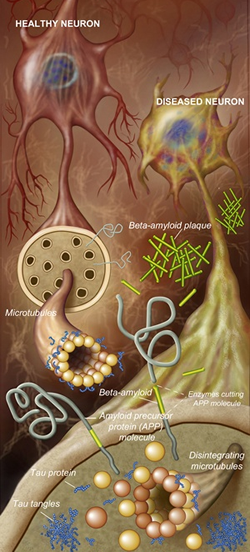 MRI and PET scans can only resolve images as small as one millimeter. However human plaques and tangles are smaller: measured in tenths of millimeters (.1 mm). The diameter of human hair ranges from .017mm - .180mm. However, in 2012 the FDA approved Amyvid, a radioactive dye which will attach to amyloid proteins and emit tracer elements that can be observed on a PET scan. Genes regulate how nerve cells work. If this regulation goes awry one of the results can be the production of plaques and tangles and nerve cells begin to die. If the production cause inflammation, then the inflammation increases the problem and dementia increases as the inflammation and buildup of amyloid plaques sparks mutations that signal the formation of tau proteins. However, which gene or genes that cause this has not been decided. Alzheimer can be early-onset or late-onset with late being more common. There have been 21 genes associated with late-onset. Besides turning off genes that produce amyloid there are genes that will protect nerves by interfering with the production of the toxic amyloid. Both of these ideas are being used to develop treatments.
 - Viral diseases, such as AIDS, destroy critical cells of the immune system, resulting in the body not being able to fight off infecting organisms and cancerous cells.
- External and internal conditions (chemistry, personal history, values) effect how people behave.
- Measuring levels of substances in body fluids allows comparisons to be made to determine a persons state of health and how treatments are affecting the patient.
- Often people react to mental distress by denying they have a problem.
- Sometimes they don't know why they feel the way they do, but with help they can sometimes recover.
- Some effects may show up right away and others not for years.
- Viruses, bacteria, fungi, and parasites may infect people and interfere with normal body functions.
- White blood cells engulf invaders or produce antibodies that attack them or mark them for attack by white blood cells. The antibodies will remain to attack later similar invaders.
- New medical techniques, efficient health care delivery systems, improved sanitation, and a fuller understanding of the nature of disease give todays humans a better chance for staying healthy than their ancestors. Conditions now are very different from the conditions in which the species evolved and some of the differences may not be good for human health.
- Some drugs mimic or block molecules involved in transmitting nerve or hormone signals and therefore disturb the normal operations of the brain and body.
- Chronic stress affects the hippocampus (involved with memory), amygdala (involved with emotional stability), and pre-frontal cortex (PFC - involved with attention, planning, and follow-through). A faulty hippocampus means you might not remember that the guy at bat likes to hit down the right field line, so you forget to cover the line when you're playing right field. A sub-par amygdala means you might go ballistic when a call doesn't go your way, and you get ejected from the game. When your PFC is drained, you tend to lose focus and zone out, so you loose focus and can't meet expectations. Chronic stress also weakens your body's immune system, making it more likely that you get colds, flu bugs and other infections during emotionally difficult times. Stress can be controlled with relaxation techniques like deep-breathing and meditation to pump up your brainpower and your athletic performance.
- People differ greatly in their ability to cope with stressful situations. Both internal and external conditions (chemistry, personal history, values...) influence the choices people make and their behavior.
- Psychological distress can affect a person's vulnerability to biological disease.
- Biological abnormalities, such as brain injuries or chemical imbalances, can cause or increase susceptibility to psychological disturbances.
- According to some theories of mental disturbance, anger, fear, or depression may result from exceptionally upsetting thoughts or memories that are blocked from becoming conscious.
- Techniques for detecting and diagnosing mental disorders include observation of behavior, in-depth interviews, and measurements of body chemistry. Treatments range from conversation to affecting the brain physically with chemicals, or even electric shock or surgery.
- Society has broad general standards and values most people agree with and deem acceptable, however the standards used to judge behavior vary for different settings, groupings and may change with time and different political and economic conditions.
- Ideas about what is good mental health and proper treatment for abnormal mental states vary from one culture to another and from one time period to another.
- Human beings vary greatly in how they cope with emotions and may therefore puzzle one another.
- Reactions of other people to an individual's emotional disturbance may increase its effects.
- Stresses are especially difficult for children to deal with and may have long-lasting effects.
- Chemical substances (insulin, blood, hormones) are becoming available through manufacturing to help people whose own bodies are unable to produce the necessary amounts for good health.
- Toxic substances, dietary habits, and personal behavior may be bad for one's health.
- Alcohol and other drugs are often abused substances.
- Such drugs change how the body functions and can lead to addiction.
- Caffeine provides a short jolt of energy. drinking too many caffeinated drinks (coffees, sodas or energy drinks) restricts blood flow to the brain. Caffeine reduces blood flow to the brain slows brain activity causes an inability to concentrate, decreases motivation, slows thinking and coordination problems. Caffeine increases the release of stress hormones and increases anxiety levels. When you want to make good decisions or shoot a last second buzzer beater, you want to be calm and confident, not stressed and anxious.
- Alcohol lowers overall blood flow. This causes less brain activity, which over time diminishes memory and judgment. A study using rhesus monkeys showed excessive alcohol consumption lowers the number of new brain cells formed in the hippocampus (one of the brain's main memory center). In the study, monkeys that consumed alcohol experienced a 58% decline in the number of new brain cells formed and a 63% reduction in the survival rate of new brain cells. Another 2008 study found that people who drink every day have smaller brains. When it comes to the brain, size matters! If you aren't making the smartest decisions when you exercise or play sports, cut back on the cocktails.
Safety, hazards, & risks
- Natural environments may contain substances (for example, radon and lead) that are harmful to human beings.
- Maintaining environmental health involves establishing or monitoring quality standards, related to use of soil, water, and air.
Natural hazards
- Natural hazards can present personal and societal challenges because miss identifying the change or incorrectly estimating the rate and scale of change may result in either too little attention and significant human costs or too much cost for unneeded preventative measures.
Risks
- Risk analysis considers the type of hazard and estimates the number of people that might be exposed and the number likely to suffer consequences. The results are used to determine the options for reducing or eliminating risks. There are risks associated with natural hazards (fires, floods, tornadoes, hurricanes, earthquakes, and volcanic eruptions). with chemical hazards (pollutants in air, water, soil, and food), with biological hazards (pollen, viruses, bacterial, and parasite), social hazards (occupational safety and transportation) and with personal hazards (smoking, dieting, and drinking).
- Individuals can use a systematic approach to thinking critically about risks and benefits. Examples include applying probability estimates to risks and comparing them to estimated personal and social benefits. Important personal and social decisions are made based on perceptions of benefits and risks.