Nebraska home to 40,000 Indigenous people in 1776
By Stu Pospisil
Omaha World Herald April 19, 2026
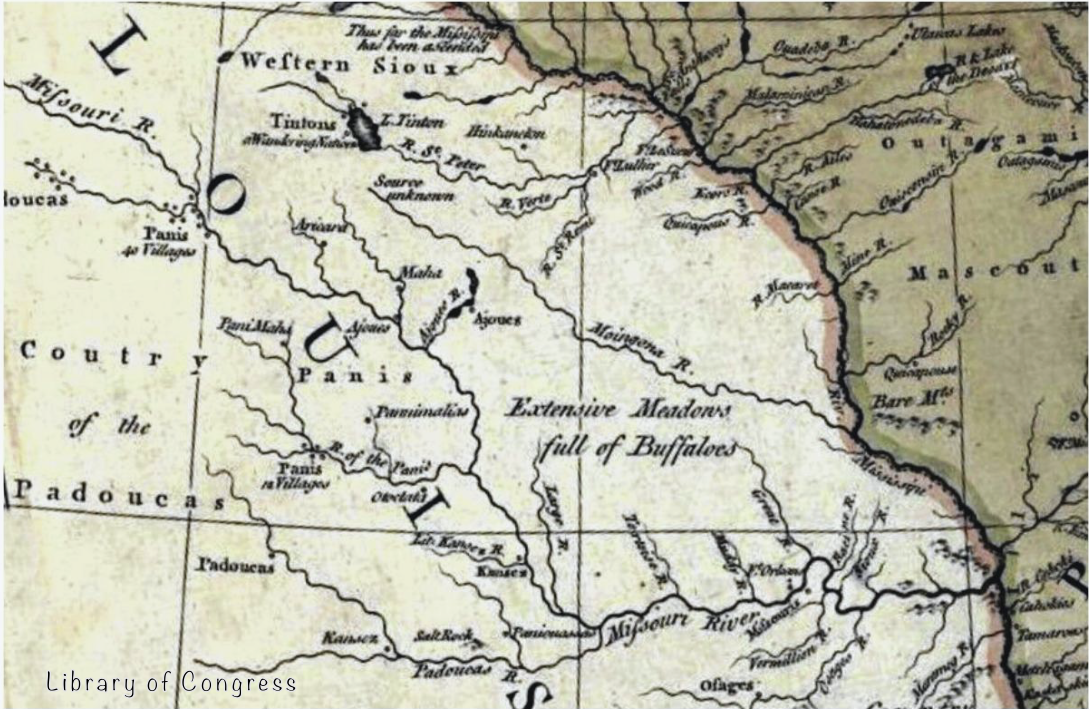
In the summer of 1776, when the Declaration of Independence was signed, Nebraska wasn't on the map.
Neither were its waterways west of the 100th meridian. The Missouri River was misdrawn. The Platte, too, was identified as the River of the Panis. Cartographers, the best they could on a North American map, pinpointed Native American settlements.
Nebraska was Panis (Pawnee) territory. Twelve villages were
indicated on the Platte near the mouth of the Loup River and another 40 on the Missouri at the 100th meridian. The Otoctata (Otoe) was shown on the south bank of the Platte, close to
its mouth.
Maha (Omahas) and Poncas also were in the east and the tipi-dwelling Lakota Sioux, Cheyenne, Padouca (Apache) and Arapahos were in the west, following bison herds.
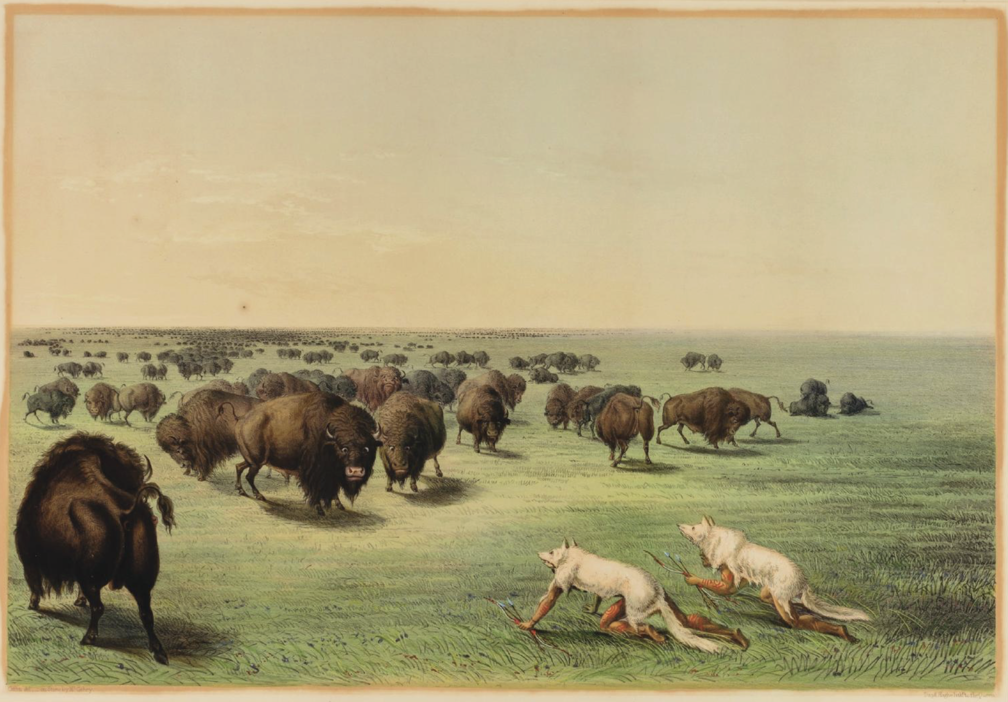
"The vast domain was a land of unbroken prairies, the grazing grounds of immense herds of buffalo, deer, elk and antelope?" wrote William Shallcross in his 1954 book, "Romance of a Village, Story of Bellevue."
Brady DeSanti, director of the Native American Studies Program at UNO, said tribal nation societies and politics in 1776 were complex, with established histories and relationships with other tribal nations.
"During the colonial period, there were people here shaping the environment and in control of their own destiny, or trying to maintain control of their own destinies and agendas, militarily, diplomatically, economically," said DeSanti, who's from the Lake Superior Ojibwe Nation.
The Pawnees are in the Caddoan linguistic family, which has its roots in the Red River of the South country. Their four bands are the Čawî' (Grand), the Kitkehahki (Republican), the Pitahawirata (Tappage) and the Skidi (Wolf). The Republican River was named for what explorers called the Kitkehahki, not for the political party.
The Skidi came north first, prior to 1500, then assimilated into the Pawnee.
The Pawnee, like the Omaha, Otoe and Poncas, built per-manent earth lodge villages on higher ground from the river bottoms where they grew crops. Those villages usually numbered 10 to 15 households, totaling 300 to 500 people. When the men left for bison hunts, they used tipis as portable housing.
The Omahas were near the mouth of the Ohio River in 1500. They remained together with the Poncas in present northeast Nebraska until about 1650, when the Ponca moved into the territory extending from the mouth of the Niobrara to the Black Hills.
The Otoes, closely related to the Ioway and the Missouria, were living near the Omahas before the close of the 17th century. From the 1730s to 1760, the Otoes had an earth lodge village extending from today's Creighton University to downtown Omaha. Lewis and Clark found the ruins in 1804 on their expedition.
In 1776, there were probably 40,000 Indigenous peoples, 15,000 in the Pawnee bands, on Nebraska soil. Based on Spanish trading records of the day, the number of white men in the area numbered about 20.
Who was the first of them to enter the state?
Francisco Vasquez de Coronado of Spain was ruled out long ago, rebutting the longheld belief that in the 1540s he reached the Platte in search of Quivira. The consensus is Coronado made it as far as Kansas and claimed the territory for his homeland.
More fables of the unexplored region were by Louis-Armand de Lom d'Arce, Baron de Lahontan. A deserter from a French fort in the Canadian wilds, Lahontan returned to Europe to write romantically about his New World experi- ences in the late 17th century.
He told of the Kingdom of the Gnascitares, a tribe that lived on the shore of a great lake, where there were canoes rowed by 200 oarsmen and buildings three stories high. Lahontan placed the Gnascitares in Nebraska and South Dakota on his imaginative map of the region.
The doubts that Lahontan ever crossed the Mississippi River don't apply to French explorer Etienne Véniard, Sieu de Bourgmont. He was the first to ascend the Missouri River to Nebraska and document his journeys.
On June 16, 1714, Bourgmont reached the mouth of the Platte, which he noted the French and Native peoples were calling the "Nibraskier," stemming from the Otoe-Missouria words "Ni Brathge" (nee BRAHTH-gay) which means "water flat." He met members of the Pawnee Tribe.
French traders subsequently filtered from the Great Lakes to the Plains, exchanging Old World goods for furs. It made Spain, its North American base in New Mexico, edgy.
In 1720, wartime in Europe, Spain believed that the French would attack it in North America. Pedro de Villasur was sent from Santa Fe with an entourage of 45 soldiers, 60 from the Pueblo Tribe, chaplain Juan Minguez, interpreter Juan L'Archeveque and Jose Naranjo, a Black explorer who had reconnoitered the Platte, on a reconnaissance mission.
They left on June 15, 1720, for the Platte. Most of the white men didn't return from the only Spanish incursion into the state, resulting in the most deadly confrontation with Native Americans on Nebraska soil.
In the Villasur Massacre, 45 men, including 32 Spaniards and 11 Pueblos, died in the August 1720 attack by a united band of Pawnee and Otoes along the Platte River near Columbus.
A year later, France sent Bourgmont back to North America to be its new commandant of the Missouri River. As charged, he built a fort on the river in today's central Missouri and escorted an Indigenous delegation to Paris in 1725. Once its curiosity was sated, the French government lost interest in the region and called Bourgmont home.
The last to explore Nebraska before 1776 were brothers Pierre and Paul Mallet. Their party of eight wintered near the mouth of the Niobrara River in 1738-39, realized they were heading the wrong way to find the Spanish, reversed course and crossed the Platte near Fremont on their trek to Santa Fe.
They were on horseback, as had been the other explorers to Nebraska. DeSanti said the introduction of the horse, sped up by the Pueblo Revolt of 1680, was revolutionizing tribal nations by 1776.
"From a practical stand point, it greatly increased tribal economies, because you could move across great distances faster. The horse was also helpful during warfare," he said. "The horse became basically a non-human relative, like the bison had been for thousands of years. The expansive view that you find for indigenous people is that one can be a person without being a human being.
"The phrase I like to use is 'other than human persons and with whom you have kinship bonds and obligations with, so the horse becomes adopted into this world view in which you have plant relatives, animal relatives, even the stars above or star people in their own right, and one learns how to maintain what they see as their kinship obligations.
"They're usually based on reciprocity that the bison gives itself to humans and native people here on the Plains and elsewhere, and humans reciprocate by using all the body parts and thanking the animal spirit for having given its life. The horse itself becomes viewed similarly."
Over the subsequent 100 years, leading into the American centennial of 1876, the bison, the horse and the tribal nations would be starting to share Nebraska. With settlers and an iron horse.
stu.pospisil@owh.com
More history