Down syndrome
Questioning is the foundation of all learning.
The first step in rejecting not knowing is to ask, why?
Sweetland
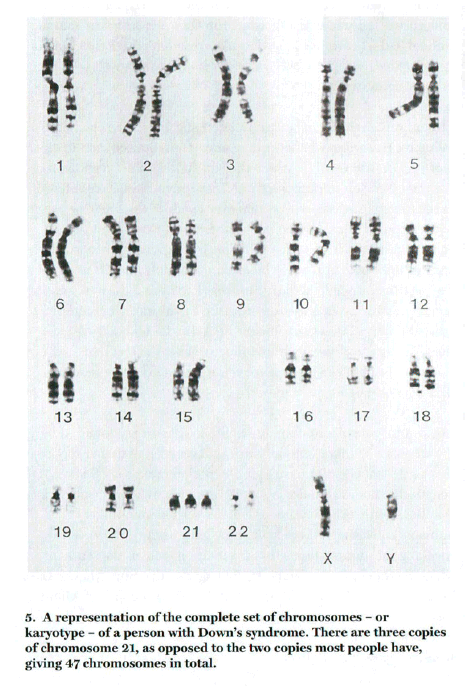
Down syndrom or trisomy 21 is a disease caused by the triplication of human chromosome 21 (HSA21) and is the most common genetic intellectual disability. It causes profound change in the brains development across all ages. It affects nearly every system in the body at multiple points throughout the lifetime. It leads to the expression of its own approximately 400 genes and eventually thousands of other genes throughout the genome. The responses of these genes vary greatly from person to person depending on their other genetics and environmental factors.
Learners with Down syndrome usually struggle with cognition and communication. Inaccurate interpretations being expressed both verbally and non verbally. Their social initiatives to peers and acceptance of their peers social initiations are successful about 70% of the time (Sigman & Ruskin, 1999). They often have a best friend and participate in social organizations outside of school. However, they are most dependent on their families.
Complete set of chromosomes or karyotype illustration.
Brain cell development
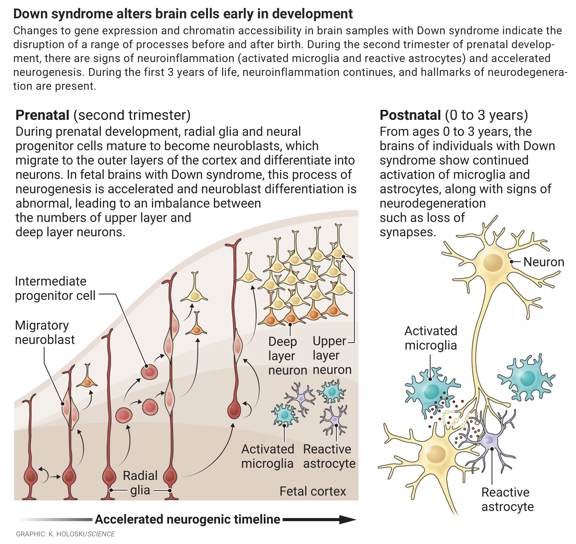
Source Science. Early dynamics of the genome in Down syndrome Cell type: Specific early hallmarks of Down syndrome are uncovered. by Tarik Haydar & Zhen Li. April 23, 2026.