Planning - Unequal Probability - Tiles in a Sock Lesson Plan
| Title of Activity Probability for Tiles in a Sock | Grade Level 2 + | Name Dr. Robert D. Sweetland |
|---|
| Concept Assessment Information (Concept & misconception source) |
|---|
| Concepts | Supporting Information | Misconceptions | Assessment |
The probability of an outcome is the number of specific outcomes out of the total number of all possible outcomes of one event. |
|
|
Diagnostic Have students predict the probability for the sock with three tiles. Summative Have students predict the probability for selection of tiles with different combinations. Generative Use a spinner with equal partitions of different colors and have the students predict the probability for each colored section to be selected. |
A prediction about a set (population) can be made from one or more samples. |
|
Young students might look at their individual data and see the numbers are closer to the actual numbers, than the sum of all the class numbers and not see how the sum can be more accurate. |
Diagnostic How many times do think you would have to pick a tile and put it back into the sock, before you would have a pretty good guess as to the color of the three tiles in the sock? Summative Have students predict the number of times they would want to draw for different amounts of tiles. Generative Have the students predict the number of times a person would have to call out the colors on it before a person could predict the different colors of the sections accurately. |
| Concept Conceptualization Activity Information |
|---|
Activity Objective Students will make a specific number of random selections with replacement and draw a conclusion about the tile population in a sock. |
| Materials: for each group (sock), three colored tiles, graphing supplies, pencil, paper, and a display board for the entire class |
| Exploration Procedure |
|
| Invention Activty One |
|
| Invention Activy Two |
|
| Invention Activy Three |
|
| Discovery Activity |
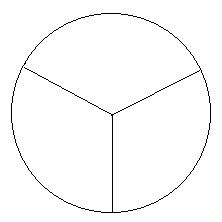
Have students make spinners and tell the probability of different colors. Spinners with equal partitions of different colors can be made and students can predict the probability for each colored section to be selected. Spinner pattern:
|