

Interventions overview
All of these interventions, as well as others, can be incorporated into procedures for helping students and others change behaviors. A general conversational procedure to help students change can incorporate any of these interventions individually or in combination.
All interventions should be implemented in an ethical manner and use the fair-pair rule.
Additionally interventions should be selected which are least restrictive and have the greatest opportunity for success.
Least restrictive interventions require self-discipline and intrinsic motivation for students to cooperate and learn, which further increases self-discipline, intrinsic motivation, and self-efficacy.
Most restrictive interventions use extrinsic motivation and are often used with students that lack self-discipline. These interventions alone seldom help students develop self-discipline, intrinsic motivation, and self-efficacy.
Stages of misbehavior descriptions and interventions
Intervention links below are categorized into six categories in a continuum from least restrictive to most restrictive.
Environmental
- Environmental Management and instructional suggestions
- Team building activities
- Role Play steps & role play reversal | Sample role play and steps |
- Talk around the issue
- Community involvement
- I-statements
- Everyday conversations to get to know students, talk to them individually, communicate in multiple ways, provide sufficient feedback and feedforward about their progress academically, socially, and emotionally, if there is a need to provide corrective information, always it privately.
- General conversational procedure to help students change
- Motivational Theory notes and procedures for achieving Self-Efficacy, self regulation, and achieving goals
- Motivational interventions
- Interest boosting - relate interest of your or others, model enthusiasm for the activity or topic, video clips of others enjoying the activity, short motivational phrases, stories...
- Hurdle help - for students that don't get started right away. Complete the beginning of the assignment together, help students find a topic, book, start an outline, talk about possible ideas for study, ...
- Support from routine - remind students about the routine or procedure and tell them to get started and see how it goes and if they need help, then let you know and you will deal with it together then.
- Fair pair rule
- Good teaching practices
- Good pace of lesson - move things along, don't belabor or dwell on anything, keep students on the clock, and always look forward.
- Developmentally activities
- Consistent routines
- Motivational activities and tasks
- Shared responsibility and choice
See also stimulus control below:
- Materials and space management as environmental management
- Variety of materials
- Comfortable room
- Encouragement
- Caring for students in school
- Grouping selecting, assigning, and managing groups
- Socio gram
- Transitions from activity to activity and good student movement
- Humor & sarcasm as behavioral intervention
- Level system as a strategy for shaping behavior
Self monitoring strategies to manage tension, stress, anxiety, annoyance, giving up
- Social skills
- Body language, nonverbal communication, & power poses. See: TED talk. Your body language shapes who you are. by Amy Cuddy. Amy describes examples supported by research for the effects of powerful and low power body language on the judgement & consequences of interactions with others and the health effects on the body: changes in testosterone & cortisol amounts. 2012, (21:02).
- Self talk
- Goal setting
- Decision making, Critical Thinking, and Change Processes
- Conflict resolution
- Problem solving strategies
- Problem solving rug
- Peace formulas
- Study skills
- Group skills
- Classroom meetings general and specific problem solving
- Bibliotheraphy Literature for caring
Social reinforcers
- Specific and general praise- written, oral, nonverbal
- High 5, Happy notes, Pat on back, Tell someone else how you feel about being successful, Wink, Sufficient feedback and feedforward, Post good work, Secret sign, Handshake, Thumbs up, Notes to students, Notes to parents
- To manage student talking appropriately
- Classroom meetings
- Classroom social contract, rules, and code of conduct
- Student of the week
- Encouragement
- Appeal to pride
Stimulus Control
- Contingencies: Can be written or oral. They are basically: If, then and When, then statements. Also know as: Grandma’s Rule or Premeck’s principle:
Eat your beans and you can have dessert. When, then:
When you eat your beans, then you can have dessert. If, then:
If you eat your beans, then you can have dessert.
Could also use what is know as a reverse of If, then:
If I help you with the first one, then do you think you might be able to do the second? or
After you do the first one together with the student, then... If I help you with one more, then do you think you can do the next one? - Self-management contracts
- Countoon
- Peer-management
- Mediation
- Modeling
- Change time of activity
- Change setting of activity
- Shaping
- Prompting
- Extinction
- Proximity control
- Interest boosting
- Student centered instruction
- Move student’s desk
- Move student in class
- Antiseptic bouncing
- Use of a study carrel
- Physical guidance
Extrinsic Reinforcement
- Reinforcement
- Reinforcers
- Rewards - beans in a jar, extra recess, free time, centers by choice, film, tape, stickers, treasure chest, stars, extra free time, recess, awards‚
- Token economy
- Point system
- Contingency contracts
- Group contingencies
- Level systems
- Differential reinforcement of other behaviors (DRO)
- Differential reinforcement of alternative behaviors (DRA)
- Differential reinforcement of incompatible behaviors (DRI)
Response cost
- Logical consequences
- Punishment
- Rules
- Contingencies (contract individual or group)
- Remove reinforcers
- Reduce recess time,
- Take away choice time,
- Give more work,
- Fines
- Check marks on the board
- Planned ignoring
- Point system
- Overcorrection, positive practice, and negative practice
- Negative practice
- Time-out in class
- Time-out out of class
- In-school suspension
- Detention
- Out of school suspension
Page Overview
- Intervention overview
- Environmental
- Self-monitoring
- Social reinforcers
- Stimulus control
- Extrinsic Reinforcement
- Response cost

---------------------
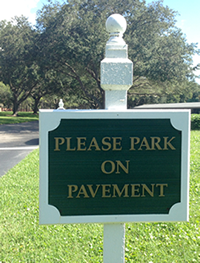
Example of being positive:
-------------------